Overview
This page organizes the categories of evidence relevant to the petition against Stephanie Simper. Its purpose is to help homeowners review the underlying facts, understand what records matter, and identify the documents that should be preserved and disclosed.
The scope of Stephanie's personal, professional, and legal misconduct is vast and is not captured here in its entirety.
These claims are supported by emails, contracts, invoices, meeting materials, and other documents already in the HOA's possession.
Homeowners are encouraged to read the HOA Document Rights page to learn how to request access under Texas law.
The Mold Remediation Disaster: Paying for Failure
When the Young Ranch clubhouse and gym suffered severe water intrusion and mold growth, the community expected a swift, professional, and legally sound cleanup. Instead, Board President Stephanie Simper aggressively pushed through a $15,741.06 contract with AdvantaClean that was fundamentally flawed, legally dangerous, and explicitly guaranteed nothing.
To make the bid look cheaper on paper, Stephanie took it upon herself to act as the vendor's personal shopper, using the community debit card to buy nearly $1,000 worth of the contractor’s supplies, including 6-mil poly, hazmat suits, gloves, and rags, through a Uline account. She explicitly admitted to over-ordering HOA-funded supplies to hit a minimum threshold just to secure a "free gift" soft rolling cooler.
When Ashley actually read the Terms and Conditions and flagged massive liabilities, Stephanie refused to request revisions. She demanded the contract be signed as-is.
Here is exactly what Stephanie forced the community to accept:
- A "Personal Guarantee" from Board Members: The contract contained a clause stating: "As the Owner or Authorized Representative, I/We/Us jointly and severally personally guarantee payment under this agreement." Stephanie was willing to pierce the corporate veil and pledge the personal bank accounts and assets of the Board of Directors to secure a vendor.
- Billing for Impossible Work: The Scope of Work billed the HOA to "Remove large debris from crawlspace floor" and "rake dirt clean" to install a 6-mil vapor barrier over the ground. Our facility sits on a concrete slab. Stephanie bound the HOA to pay for work on a dirt floor that does not physically exist because the vendor copy-pasted a residential pier-and-beam template.
- Zero Liability or Warranty: We hired a company specifically to remove mold. Yet, the contract’s Limits of Liability clause stated: "AdvantaClean expressly declines any liability for mold, fungus, or microbial proliferation pursuant to, or resulting from our work." It further stated no warranty existed for their services.
- Regulatory Incompetence: The contract cited compliance with New York City Department of Health guidelines rather than the legally required Texas Mold Assessment and Remediation Rules (TMARR).
The Leadership Failure: When presented with undeniable proof that this contract was a liability nightmare, Stephanie’s response was not to protect the HOA. Instead, she launched a 3:00 AM email tirade, insulted Ashley’s intelligence, falsely claimed a concrete slab's baseboards constitute a "crawlspace," and declared the dangerous contract "approved."
THE RESULT: THE MOLD IS BACK (AND IN OUR AIR DUCTS)
This is why fiduciary duty matters. Because Stephanie forced through a contract with zero warranty and refused to allow a comprehensive secondary inspection of the building's structural flaws, the inevitable happened: The mold returned.
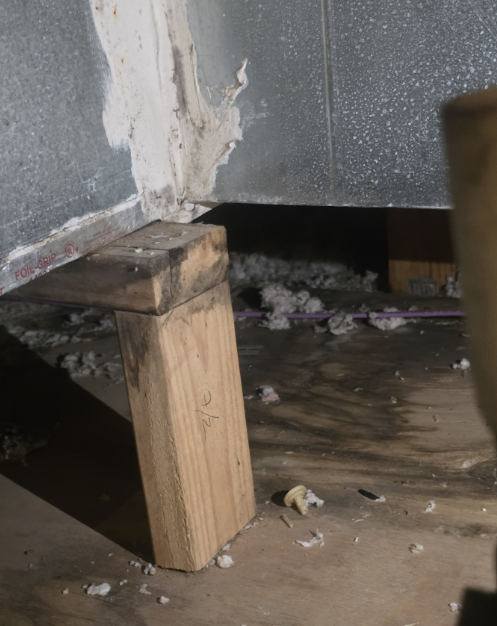
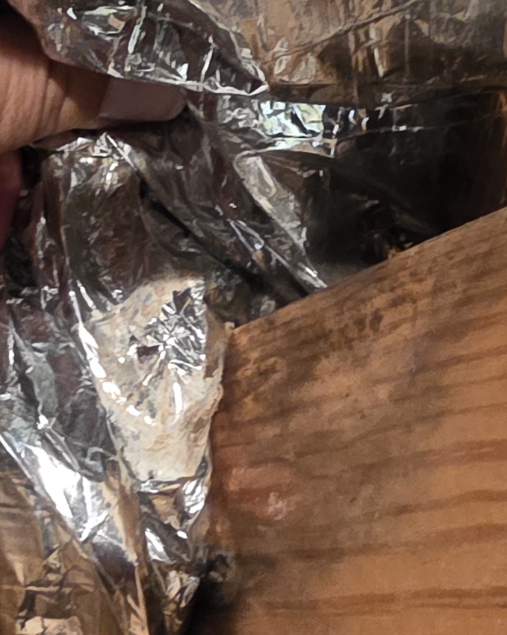
On March 15, 2026, just weeks after we paid over $15,000 for "remediation," our general contractor notified the Board that new mold growth was found throughout the gym attic and covering the HVAC ductwork.
The contractor's assessment revealed that the ductwork was never installed to code. The system was sweating, dripping condensation onto the framing, and breeding mold. Most alarmingly, the contractor explicitly warned the Board:
"If there is growth outside of the conduit there is most likely growth inside as well which will be blown into the rooms that work services when the system turned back on."
Because Stephanie refused to fix the root cause and accepted a contract that absolved the remediation company of any liability, the HOA now has zero financial recourse. We are now being hit with a new $6,500.00 proposal just to rip out the contaminated HVAC trunk line and replace 18 supply ducts.
We paid top dollar for a contract that guaranteed nothing, and now we are facing the reality of blowing mold-infested air into a "remediated" gym. That is not leadership; it is financial negligence.
The Gym, Clubhouse, and Pool Delays: A Cycle of Band-Aids
Young Ranch boasts over $1 million in community amenities. Yet, for years, residents have been locked out of their own facilities. The reason is simple: our HOA leadership prefers writing checks for temporary band-aids rather than investing in permanent structural solutions.
The Gym and Clubhouse Leaks
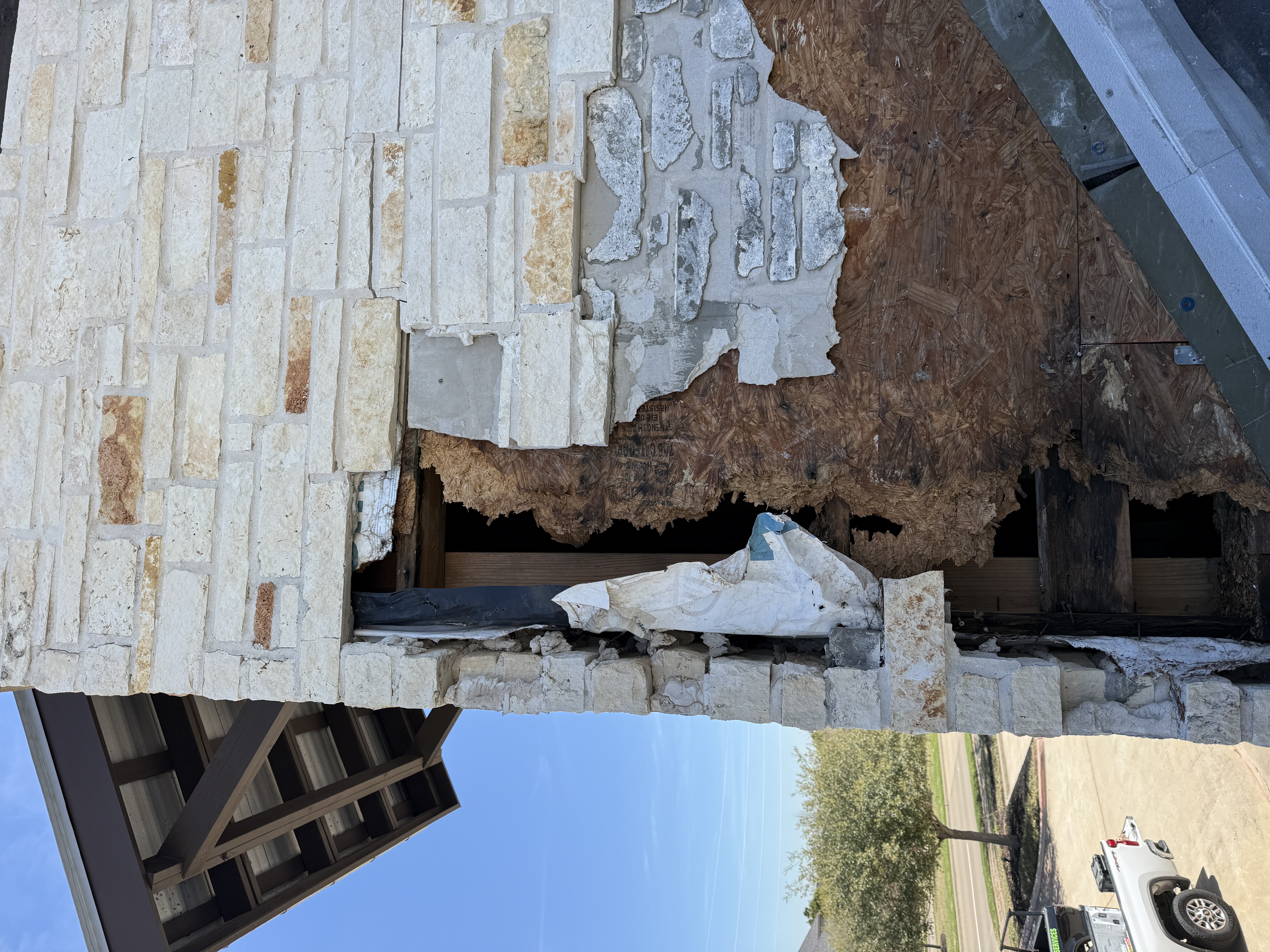
In March 2026, after paying thousands for mold remediation, another leak was discovered in the gym. The root cause was missing tape flashing behind the exterior stonework and a shoddily patched roof jack.
Fiduciary duty dictates that when chronic, multi-year structural defects are discovered, a board should solicit bids from specialized masonry and roofing experts to ensure the building is permanently sealed before putting new drywall up. When Ashley consulted an industry expert with 40 years of roofing and insurance adjustment experience, who recommended specific water-testing protocols and counter-flashing techniques, Stephanie went on the attack.
Rather than welcoming free, expert guidance to protect our facilities, Stephanie accused Ashley of "sharing confidential board secrets." She unilaterally directed the community manager to authorize a $4,000+ purchase order to her preferred general contractor to tear down the stone and patch the roof based on his sole assessment; the same contractor who had previously failed to secure the facility from leaks. She prioritized her vendor relationships over permanent, verified structural integrity.
The Pool Chaos
The mismanagement extends to our pool. After being closed for two years, it was opened late last summer with catastrophic results: vandalism, trash, and unsanitary conditions, because leadership failed to properly plan for a pool manager.
This year, history repeated itself. Weeks before the planned Spring Break opening, the Board discovered the HOA did not even have the necessary permits or a passed inspection from the county or city. Vendors were left confused about their scopes of work, pool hours were changed on the fly, and the community was left in the dark.
Ashley observed that many residents were unable to access the pool using their fobs and proactively reached out to the security company and the community manager to ensure the system was functioning properly. When she informed the board and community manager of the issue, Stephanie responded with an explosive tirade of insults, repeatedly telling Ashley to "stay in her lane" and accusing her of being an "embarrassment to the board," turning what had been a good-faith effort to help into a hostile confrontation.
Amenities do not manage themselves. They require proactive planning, stringent vendor oversight, and a refusal to settle for quick fixes. We currently have none of the above.
Emergency Structural Repair Notice: Rotted Framing, Majority Approval, and Safety Questions
In a community-wide notice, homeowners were told that the Board had approved an emergency exterior repair to the clubhouse tower wall and adjacent fitness center area after significant water intrusion was found behind the masonry and flashing.
"Improper or missing flashing and Tyvek house wrap," "broken masonry allowing direct water penetration," "rotted sheathing and framing components behind the wall," and "active moisture intrusion that will worsen with upcoming rain."
Those are not cosmetic conditions. The Board's own notice describes hidden decay in framing members at an amenity building that has already suffered repeated leak and mold problems. Once rotted sheathing and framing are known, the responsible course is to document the condition thoroughly and obtain a qualified structural evaluation before simply closing the wall back up.
Ashley warned that the community should not gamble on another contractor-driven patch without first getting a structural engineer to determine whether the wall assembly and adjacent framing remain sound, what material must be replaced, and whether additional stabilization is necessary before repairs proceed.
Why this matters: if leadership rushes to cover deteriorated framing without independent engineering review, the HOA risks paying for another incomplete repair while leaving unresolved safety issues inside the wall assembly.
- Safety risk: hidden structural decay can continue to worsen if unstable materials are not fully evaluated and replaced.
- Financial risk: surface repairs made before the full condition is understood often lead to repeat failures, added demolition, and higher costs.
- Insurance and code risk: incomplete corrective work can create disputes over coverage, compliance, and responsibility if the problem returns.
- Liability risk: if known deterioration later causes injury or major property damage, homeowners may ask why a proper structural review was not obtained when the warning signs were already documented.
The same notice also stated that Sixth Man Construction was selected based on "majority Board approval." That wording matters. Under Section 6.4 of the Young Ranch Bylaws, actions taken outside a noticed board meeting require unanimous written consent of all directors.
"The Board approved Sixth Man Construction to complete the emergency repair. Their proposal was selected based on majority Board approval..."
If this repair was authorized outside a meeting based only on a majority email vote, the approval method appears inconsistent with Section 6.4. Homeowners should demand the written record showing whether unanimous written consent existed, whether dissenting directors objected, and why an independent structural engineer was not engaged before moving forward.
At minimum, this sequence raises serious gross-negligence and fiduciary-duty concerns: Ashley warned that visible decay and repeated water intrusion required deeper evaluation, yet leadership still moved to spend HOA funds on a contractor-selected repair path without first obtaining an independent structural-integrity assessment. That is not a minor paperwork problem. It puts HOA property, HOA money, and potentially member safety at risk.
Evidence: Signing Unauthorized Contracts & Bypassing the Board
A Homeowners Association Board is a democratic panel of five equal directors. It is not a dictatorship. To protect your assessment dollars from fraud, favoritism, and waste, our governing documents dictate exactly how money can be spent.
Stephanie Simper routinely ignores these rules.
Under Section 6.4 of the Young Ranch Bylaws, any action taken by the Board outside of a formally noticed, open meeting requires the unanimous written consent of all directors.
Stephanie consistently violates this mandate. She treats the HOA like a personal fiefdom, operating the multi-million-dollar community via text messages with vendors from her personal cell phone and rapid-fire email chains. If she gets one or two of her compliant board members to say "Approved" in an email, she immediately authorizes the vendor to begin work, frequently overriding or entirely ignoring dissenting votes and questions before unanimous consent is reached.
The Evidence:
- Change Orders on the Fly: When thousands of dollars in new masonry and roof repairs were needed in March 2026, Stephanie bypassed formal board meetings and competitive bidding, threatening to push the costs through as a "Purchase Order" via email without unanimous consent.
- Emergency Repair by "Majority Approval": After homeowners were told the clubhouse tower wall and fitness center had rotted sheathing and framing behind the masonry, the official notice stated that Sixth Man Construction was approved based on "majority Board approval." If that decision was made outside a meeting, Section 6.4 required unanimous written consent, not a simple majority.
- The MUD Agreement Surrender: Stephanie signed a Special Warranty Deed giving away community land to the MUD without simultaneously securing a revised Maintenance Agreement. The result was that Young Ranch was left footing the bill for landscaping and irrigation on property the HOA no longer owned. When Ashley drafted a revised contract to shift 100% of those irrigation costs back to the MUD, Stephanie blocked it and refused to let the HOA's attorney even review the cost-saving measure.
- Circumventing Procurement: Stephanie controls a prepaid community debit card and uses it to purchase HOA supplies through her personal and workplace accounts, including Uline, Home Depot, and Nellis Auctions. While framed as "finding deals," buying community assets through personal accounts bypasses property management oversight, corrupts the audit trail, and violates basic non-profit accounting standards.
When a President routinely bypasses the bylaws to sign contracts without unanimous consent or an open meeting, they are not cutting red tape, they are operating rogue. It exposes the Association to immense legal liability and ensures that your money is spent in the shadows.
Email Evidence
Gross Negligence and Fiduciary Breach: Contractual Risk
Stephanie Simper demonstrated a reckless disregard for the legal and financial safety of the Board and the Association by aggressively defending a contract containing dangerous personal-guarantee clauses.
Failure to Protect Directors from Personal Liability: In January 2026, a $15,741.06 contract with AdvantaClean included a clause making Board members jointly and severally personally liable for the debt. When this was flagged, Stephanie refused a legal review and responded with hostility.
"And FYI I’m not paying out of my personal bank account but the community debit card from the community funds! Just stop! Stop typing, stop talking. Period."
January 13, 2026 at 3:45 AM CST
Violations of Association Bylaws and Procedural Requirements
Stephanie habitually bypassed the legal requirement for unanimous written consent for actions taken outside of formal meetings under Bylaw Section 6.4, effectively running the Board as a unilateral authority.
Bypassing the Board Vote: She repeatedly declared major expenditures approved without full consensus or formal meetings.
"It’s approved. Period. We are moving forward to get this gym/clubhouse repaired and opened for the community."
January 12, 2026 at 11:34 PM CST
Emergency Work Framed as a Majority Vote: In the later community notice about the clubhouse tower and fitness-center repair, homeowners were told the contractor was selected based on "majority Board approval" even though Section 6.4 requires unanimous written consent for action taken outside a meeting.
"The Board approved Sixth Man Construction to complete the emergency repair. Their proposal was selected based on majority Board approval..."
Shadow Governance: After Ashley left the Microsoft Teams channel because of Stephanie's verbal abuse, Stephanie pushed official business into Microsoft Teams to continue conversations she believed Ashley would not see.
"Board- lets discuss offline via teams so avoid numerous emails and one of us can reply in a separate email..."
February 4, 2026 at 5:19 PM CST
Financial Mismanagement and Vendor Bias
Under Stephanie’s presidency, the Association repeatedly returned to the same preferred vendor even as the underlying problems continued, resulting in more spending without a durable solution.
Blocking Competitive Bidding: Ashley requested second opinions so the Board could evaluate the best course of action before committing more HOA funds, especially because the same contractor had already been awarded repeated work and the leaks and related failures still persisted. Stephanie instead pushed to keep awarding additional thousands of dollars in discovered repairs to her preferred contractor, Sixth Man Construction, while dismissing calls for second opinions or bids to address underlying issues.
"I trust Brandon's work... a second bid... is not required... You should yield to trying to be right about everything when factually you haven;t been most times."
March 13, 2026 at 12:52 PM CDT
Professional Misconduct and Toxic Behavior
Stephanie Simper used psychological intimidation and personal verbal attacks to suppress the oversight duties of other directors.
Harassment and Infantilization: She used an unprofessional and abusive tone when questioned on technical errors.
"I’m fresh out of hand puppets and crayons but hopefully this photo... will suffice."
January 13, 2026 at 3:45 AM CST
Weaponizing Personal Status: She used another director's parental responsibilities to suggest they were unfit for office.
"Don’t you have young children that need your attention and should be getting some rest to tend to them during the day?"
January 13, 2026 at 3:45 AM CST
Gatekeeping Information: She admitted to hiding official HOA history in her personal accounts. Hiding correspondence on personal accounts means it would not be reported to homeowners making records requests and is also not available to other board members trying to keep good records.
"I’m sending this from my personal email because that is where Robin from KRJ would send emails all the time... probably why your team might be having problems finding information."
February 10, 2026 at 12:11 PM CST
Know Your Rights: Transparency in the Young Ranch HOA
As a homeowner in Texas, you pay assessments to fund our community. In return, you possess absolute, legally protected rights to know exactly how your money is spent, how contracts are awarded, and how decisions are made behind closed doors.
There is a dangerous misconception currently being pushed by HOA leadership that Board business, vendor negotiations, and Director emails are "confidential board secrets."
This is legally false.
Under Texas Property Code Chapter 209, the business of the HOA is your business. The Association is legally required to keep its books and records open to and reasonably available for examination by any owner. Transparency is not a courtesy; it is the law.
Here is exactly what you are entitled to see and how to get it.
What You Have the Right to See
Texas law defines "books and records" broadly. Because the HOA manages your funds, you have the right to inspect:
- Board Emails: Emails sent or received by Directors, officers, or the management company that discuss HOA business, including budgets, rule enforcement, vendor communications, and meeting scheduling, are requestable association records. Electronic formats do not make HOA business immune to oversight.
- Contracts and Bids: You have the right to see every contract signed by the HOA, as well as the competitive bids, or lack thereof, leading up to those contracts.
- Financial Records: Bank statements, general ledgers, invoices, and expense reports.
- Meeting Minutes: Official records of all open and executive session decisions.
Note: The law does protect genuine privacy. The HOA is not required to release attorney-client privileged communications, nor will it release the personal financial data, contact information, or violation history of your individual neighbors.
The "Confidentiality" Myth
If an HOA President or Director claims that discussing a vendor contract, a landscaping bid, or a structural repair with the community is a "breach of confidentiality," they are misleading you.
When Directors conduct the business of the Association, they are acting as fiduciaries for the homeowners. Unless they are actively consulting with the Association's attorney regarding active litigation, or discussing a specific homeowner's private account, their HOA-related communications are public records for the membership.
You do not have to accept "just trust us" as an answer. You have the right to verify.
How to Request HOA Records in Texas
If you want to see the contracts being signed, the invoices being paid, or the emails justifying delayed projects, you simply have to ask.
Under Texas Property Code § 209.005, the process is simple:
- Draft a Written Request: Write a letter identifying the specific records you want to inspect or copy. Be precise. For example: "I am requesting all emails between Board members and Sixth Man Construction from January 1, 2026, to present," or "I am requesting all un-redacted vendor invoices paid in February 2026."
- Send it by Certified Mail: By law, you must submit your request by certified mail, with a return receipt requested, to the HOA's mailing address or its designated management company. For Young Ranch, this should be mailed to our current management company, Inframark.
- Choose Your Format: In your letter, state whether you want to inspect the records in person, or if you want copies forwarded to you electronically or by mail.
- The 10-Day Clock: Once the HOA receives your certified letter, they have 10 business days to either provide the records or send you a written notice stating that they need more time, which cannot exceed an additional 15 business days.
Demand Accountability
A healthy HOA operates in the light. When leaders attempt to hide their communications, bypass unanimous board consent, and shield vendor contracts from community scrutiny, it is the homeowners who ultimately pay the price.
Don't let anyone tell you that HOA business is none of your business. Exercise your rights. Demand the records. Demand transparency.
Lawsuit Update (April 9th)
Important note: This bulletin is written for homeowners as a status update based on the filed court papers, the proposed bylaw amendment, the HOA email record, Teams notification emails, and the contract language discussed in those records. The case is still pending. No final judgment has been entered.
Brief summary
This lawsuit challenges how Young Ranch HOA business was handled during a dispute over vendor contracts, structural repairs, board communications, and a proposed bylaw amendment. The plaintiffs allege that major decisions were pushed through outside proper meeting procedures, records were scattered across personal and unofficial channels, objections to contracts and repair decisions were met with hostility, and a bylaw amendment was then advanced to loosen off-meeting action and make director removal easier.
The immediate court fight centers on two things: the proposed First Amendment to the Bylaws and the effort to remove Ashley Malin from the board. On April 2, 2026, the court signed an ex parte Temporary Restraining Order blocking further action on that amendment and any removal effort under it, while also ordering preservation of records across email, texts, Teams, personal devices, and vendor portals until the injunction hearing.
The broader factual record described in this bulletin concerns:
- aggressive off-meeting decision-making,
- defective or one-sided contract handling,
- repeated reliance on informal approvals,
- scattered recordkeeping across personal and unofficial channels,
- hostility toward oversight,
- and a documented push to change the bylaws in the middle of the conflict and remove the one director who kept objecting.
The sections that follow walk through the court posture, the amendment, the AdvantaClean contract, the repair dispute, and the quoted communications that are cited as evidence of retaliation and misconduct.
Where the case stands right now
According to the court papers currently on file:
- On April 1, 2026, Phillip McNallen and Ashley Malin filed a verified petition seeking declaratory relief, a temporary restraining order, a temporary injunction, and a permanent injunction.
- On April 2, 2026, the court signed an ex parte Temporary Restraining Order to preserve the status quo pending a hearing.
- The court set the temporary injunction hearing for April 15, 2026 at 1:00 p.m. by Webex.
- The citation, TRO service paperwork, and precept relating to the hearing were issued on April 7, 2026.
The TRO restrains the defendants from:
- voting on, adopting, signing, certifying, or filing the document styled "First Amendment to the Bylaws" before further court action;
- taking action to remove Ashley Malin, or any other elected director, under that purported amendment;
- treating the purported amendment as valid or enforceable before further order; and
- destroying, deleting, altering, concealing, or failing to preserve records relating to the association business implicated by the suit, including records in personal email accounts, text messages, Microsoft Teams, personal devices, and third-party vendor portals or accounts.
That does not mean the case is over. It does mean a district court concluded there was enough in the written record to step in immediately and stop the challenged conduct until a hearing could be held.
What the lawsuit says this fight is really about
The lawsuit does not frame this as a mere clash of personalities. It frames the dispute as a governance fight over whether the HOA will be run by its governing documents or by ad hoc email majorities, personal channels, and retaliation against dissent.
The petition states that Ashley Malin was the one director consistently:
- raising structural and contractual issues,
- demanding competitive bidding,
- asking to review signed agreements,
- objecting to off-meeting approvals,
- and pressing for qualified professional evaluation of deteriorating structural components before more HOA money was spent.
The petition further alleges that, in response, Stephanie Simper engaged in a documented pattern of:
- illegal off-meeting approvals,
- poor contract controls,
- shadow governance,
- and hostile retaliation.
That matters because the proposed amendment and the removal effort did not arise in a vacuum. They arose after written objections to contracts, structural repair decisions, and records practices had already been made.
What the proposed "First Amendment to the Bylaws" actually would do
The proposed amendment is significant because it would directly shift power inside the HOA.
On its face, the document states that it was approved by a majority vote of the Board. It then does two major things:
1. It expands the Board's power to remove a director
The proposed amendment rewrites Section 5.3 so that, after declarant control, a director may be removed not only by a majority vote of the membership, but also by a 2/3rds vote of the Board of Directors.
That is not a clerical tweak. That is a direct power shift away from the homeowners and toward the sitting board.
2. It loosens off-meeting board action
The proposed amendment rewrites Section 6.4 to allow off-meeting action by electronic or telephonic means within a 24-to-72-hour window. It specifically gives the President the power to determine that time period unless unwilling or unable to do so.
The document also says that if any provision of the amendment conflicts with the bylaws, the amendment shall control.
That is why this document became the center of the litigation. It was not just about wording. It was about who controls removal power and how easily board action can be pushed through outside a formal meeting.
The AdvantaClean contract: what the actual contract language said
One of the clearest reasons this dispute escalated is that the actual AdvantaClean contract language was not merely imperfect. It was loaded with provisions any careful board should have stopped and reviewed.
Below are direct excerpts from the contract language provided for this update.
Personal guarantee language
"As the Owner or Authorized Representative, I/We/Us jointly and severally personally guarantee payment under this agreement."
That is not normal nonprofit-association protection language. It is the opposite.
No liability for mold-related failure
"AdvantaClean expressly declines any liability for mold, fungus, or microbial proliferation pursuant to, or resulting from our work."
The HOA was allegedly hiring the company for mold remediation. This clause said the company declined mold-related liability arising from the work.
No warranty
"Unless provided under separate cover, no warranty, either expressed or implied, exists in connection with AdvantaClean's services."
In plain English, that means: pay the invoice, accept the risk, and do not expect a warranty unless there is some separate document.
Crawlspace / dirt-floor language
"Remove large debris from crawlspace floor. All dirt to be raked clean for debris. Install a complete coverage 6-Mil Poly Plastic Vapor Barrier across the ground."
That language became a major flashpoint because the facility at issue is not a pier-and-beam house with exposed soil under a crawlspace. It is a community amenity building described in the record as sitting on a concrete slab.
New York guidelines in a Texas HOA job
"AdvantaClean provides mold remediation in accordance with the standards set forth by the IICRC ... the EPA ... and the New York City Department of Health and Mental Hygiene 'Guidelines on Assessment and Remediation of Fungi in Indoor Environments'."
That language reads more like generic template wording than a site-specific, Texas-focused remediation contract.
No guaranteed completion time
"AdvantaClean does not agree to guarantee that the work will be completed by or within any particular time."
Credit, collections, and lien language
The contract also contained unusually aggressive collections language, including:
"Owner authorizes AdvantaClean to perform routine credit history investigation at any time prior to or during this project."
"In the event of non-payment within terms, AdvantaClean reserves the right to file a Mechanics Claim of Lien for the full amount of work."
"Delinquent accounts may be turned over to the three major credit reporting agencies..."
Taken together, this was not a narrow, carefully tailored HOA contract. It was a heavily one-sided service agreement with personal-guarantee language, no warranty, no mold liability, aggressive collection terms, and site language that residents immediately questioned.
Why Ashley objected to the AdvantaClean contract
The objection was not that mold should be ignored. The objection was that the HOA should not sign a flawed contract just to move fast.
The written record contains clear objections. In the email record, Ashley wrote:
Ashley McNallen, in the AdvantaClean email thread:
"I am not in support of signing a contract that includes a personal guarantee for Board members, scopes of work for dirt floors that don't exist, and zero warranty on the results."
Ashley McNallen, asking management for legal review:
"Tanisha, can we have legal review the terms of this contract, it looks really bad for us."
Ashley McNallen, in the same objection thread:
"This invoice is nonsensical."
"They have a section about cleaning out the crawl space. We have a concrete foundation right, what crawl space are they cleaning?"
"This is the lowest effort contract I've ever seen and much of it does not make sense."
That is not sabotage. That is basic diligence from a director reviewing a five-figure remediation contract.
What happened next makes the contract fight even worse
The court filing states that after the contract was pushed through, the mold returned by March 2026, including on HVAC ductwork, and the HOA allegedly faced another $6,500.00 proposal to remove and replace contaminated duct components.
That matters for an obvious reason: if the vendor contract disclaimed mold liability and offered no warranty, then the HOA was left holding the bag when the problem came back.
This is exactly why contract review matters. A bad clause is not academic when the work fails.
The structural repair problem was not limited to mold
The petition and the evidence summary also describe a second major problem: repeated water intrusion and hidden deterioration in the clubhouse tower wall and adjacent fitness-center area.
According to the records described on this site, homeowners were informed that there was:
- improper or missing flashing,
- broken masonry allowing water penetration,
- rotted sheathing and framing,
- and active moisture intrusion.
Those are not cosmetic defects. Those are warning signs of concealed structural damage in a building that had already experienced repeated leak and mold issues.
The lawsuit says Ashley Malin asked for an independent structural engineer to determine the extent of the damage and the proper scope of repair. Instead, the petition alleges the work was pushed toward a preferred contractor through email rather than through fully vetted, professionally analyzed, open-meeting decision-making.
That is one of the lawsuit's core points: the problem was not just one contract. It was a broader pattern of informal approvals, weak review, and resistance to independent scrutiny.
The written tone in the record matters
Bland descriptions like "communications broke down" do not capture what appears in the written record. The tone shown in the record is part of the story because it helps explain why the dispute escalated, why oversight became difficult, and why the bylaws suddenly became a target.
What follows are direct excerpts from the email record and Teams notification emails. Some are short. Some are ugly. All are important because they show the pattern over time.
Direct excerpts showing the pattern of hostility, intimidation, and retaliation
Stephanie Simper, January 12, 2026 - AdvantaClean thread
"your email is completely unprofessional as you sound absolutely clueless on what this is all about."
"Please stop wasting our time..."
"It's approved. Period. We are moving forward to get this gym/clubhouse repaired and opened for the community."
That is the tone used after objections were raised about personal guarantees, site-mismatch scope language, and lack of warranty.
Stephanie Simper, January 13, 2026 at 3:45 a.m. - AdvantaClean thread
"Just stop. Right now."
"I'm appalled and outraged I'm having to school you in this at 3AM."
"I'm fresh out of hand puppets and crayons..."
"Just stop! Stop typing, stop talking. Period."
"You clearly don't know the law and how HOA's work..."
"It's making you sound inadequate."
"Don't you have young children that need your attention and should be getting some rest to tend to them during the day?"
"I will be speaking with Tanisha AND the Board tomorrow regarding your position going forward."
Stephanie Simper, January 13, 2026 - later in the same AdvantaClean thread
"I will be speaking with management and legal counsel on our options regarding these unneeded stresses..."
This is where the contract fight stops looking like a normal disagreement and starts looking like a retaliatory pressure campaign.
Stephanie Simper, February 17, 2026 - pool operations thread
"only Randy, Darrell, and I know how this works..."
"I refuse to allow my summer to be spent picking up after people..."
"those that want a pool with longer hours... should just get a pool of their own in my opinion."
Stephanie Simper, March 5, 2026 - MUD / landscaping credit thread
"I do understand that you are new to the community and so those of us seasoned residents are well aware..."
That phrase shows up more than once in this record: questions are not answered on the merits; they are waved away by stressing who is new and who is supposedly entitled to speak with authority.
Stephanie Simper, March 8, 2026 - proposed MUD agreement thread
"The fact you are changing legal paperwork seems to be out of your scope of duties."
"If this is something that was generated by your newly purchased AI program... I highly suggest you stop immediately."
"You do not know your place on this panel..."
"You are not in charge here..."
"you have presented yourself as a rogue board member."
"there is going to be a decision and a vote regarding your position on the board..."
"We will be speaking with legal counsel on moving forward with the formal process on your removal from the board."
At that point, the retaliation theory is not abstract anymore. It is written down.
Randy Bienek, March 9, 2026 - removal thread
"I move we schedule a special meeting to vote on the removal of Ashley McNallen."
Tiyonda Omoni, Inframark Community Manager, March 9, 2026 - written correction
"After reviewing the Owner's Association of Young Ranch Bylaws, I must clarify that the Board of Directors does not have the authority to remove a sitting director."
That management correction is one of the most important lines in the entire record. The removal push advanced far enough that management had to step in and say, in writing, that the Board lacked the power it was trying to exercise.
Comparison of the objections and the responses
Another reason the record matters is that the underlying objections were often calm, specific, and tied to actual contract language.
For example, Ashley's written objections included:
Ashley McNallen, in the AdvantaClean objection emails:
"I am not in support of signing a contract that includes a personal guarantee for Board members, scopes of work for dirt floors that don't exist, and zero warranty on the results."
"This proposal needs to be sent back... to remove the personal guarantee, correct the scope of work to match our building, and reference Texas statutes."
"Tanisha, can we have legal review the terms of this contract, it looks really bad for us."
That is what makes the response record so damning. The record does not show careful rebuttal followed by open deliberation. It shows ridicule, shutdown language, personal attacks, and threats about board position.
Why the records issue is bigger than one argument
The court papers do not just talk about one ugly email chain. They talk about fragmented records and informal governance.
The petition alleges a pattern in which HOA records were spread across:
- personal email accounts,
- text messages,
- Microsoft Teams,
- vendor portals,
- and personal devices.
That is a governance problem all by itself.
When association business is conducted through personal and scattered channels, several things happen at once:
- the Board loses a reliable central record,
- homeowners lose meaningful transparency,
- signed agreements and approvals become harder to verify,
- and the association becomes vulnerable to selective disclosure, missing context, and finger-pointing.
That is why the TRO's preservation language is so broad. The court did not limit preservation to official HOA inboxes. It specifically reached into the personal and third-party systems where the record was alleged to exist.
Sequence of events surrounding the proposed amendment and removal effort
Read the sequence in order:
- A director objects to contract terms, off-meeting approvals, and lack of structural review.
- That director is mocked, belittled, and told to stop talking.
- Official business is steered into side channels and offline coordination.
- Communications escalate into direct statements about board position and removal.
- A proposed bylaw amendment appears that would make board-member removal easier and off-meeting action looser.
- A removal push follows.
- Management has to clarify that the Board lacks authority to remove a sitting director under the existing bylaws.
- The court intervenes before the challenged amendment and removal effort can move forward.
That sequence helps explain why the retaliation claim became central to the case. Even before any final ruling, the pattern in the record helps explain why the matter wound up in court.
Questions raised by the record
At a minimum, the record raises the following questions:
- Where are all signed contracts, approvals, invoices, and supporting communications?
- Were major expenditures and repair decisions approved in properly noticed meetings, or outside meetings without unanimous written consent?
- Why was a contract with personal-guarantee language, no warranty, no mold liability, and crawlspace dirt-floor language ever allowed to move forward?
- Why was independent engineering review resisted when rotted framing and concealed deterioration were documented?
- Why were personal channels, Teams side discussions, and unofficial communications being used for HOA business?
- Who drafted the proposed bylaw amendment, who approved it, and why was it advanced when a removal campaign was already underway?
- Have all HOA-related records on personal email accounts, phones, Teams, and vendor portals now been preserved?
Closing
This dispute should not be reduced to a personality conflict.
The contract language was real. The quotes were real. The removal push was real. The management correction was real. The proposed amendment was real. The court intervention was real.
The record shows why these events and decisions have drawn serious scrutiny. It also shows why transparency matters now more than ever.
The issues described here concern whether HOA governance is open, professional, documentable, and legally grounded, or instead driven by rushed approvals, hidden channels, bad contracts, retaliatory maneuvering, and contempt for basic oversight.
Read the documents. Read the quotes. Compare the contract language to the responses it triggered. Then ask yourself whether this is how a well-run HOA is supposed to operate.