HOA Rights to Request Business Documents

HOA Resources

Why This Petition Exists

This petition exists because Board President Stephanie Simper has advanced and defended board actions that exposed the Young Ranch HOA to serious financial, contractual, and governance risk, while retaliating against a board member who raised legitimate objections.

As a sitting board member, Ashley raised serious concerns about contract terms, vendor accountability, spending oversight, and repair strategy. Those concerns were not minor or technical. They involved contract language that allowed vendors to bill without meaningful limitation, misstated what services would actually be delivered, imposed no clear completion timeline, shifted litigation costs onto the HOA, and even exposed board members to potential personal liability for HOA debts.

Rather than welcome scrutiny of these terms, Stephanie called a vote to remove Ashley from the Board and engaged in repeated mocking, belittling, and hostile conduct. This toxicity extends beyond the Board: When residents have reached out on social media to voice legitimate frustrations about our delayed amenities, Stephanie’s response has been to block them, mock them in private communications, and in an unhinged escalation of malice, she has actually told homeowners to kill themselves.

This petition is not about personality. It is about whether Young Ranch is governed lawfully, prudently, and in the best interests of homeowners.

Click here for documentation and evidence

The Bottom Line: We want board accountability, better spending, and respectful leadership that follows the bylaws.

Sign the Petition

By signing below, I, the undersigned Member of Owners Association of Young Ranch entitled to vote for the property identified below, hereby request a special meeting of the Members under Article X, Section 10.2 for the purpose of voting on the proposed removal of Stephanie Simper as a director under Article V, Section 5.3, and I further appoint the administrator of RemoveStephanie.org as my written and revocable proxy under Article X, Section 10.5 and TPC § 209.00592(a)(1) to appear at that meeting and any adjournment, to be counted for quorum, and to cast my vote in favor of removal of Stephanie Simper as a director.

What We're Asking

By signing this petition, the undersigned Members of Owners Association of Young Ranch request the following action:

  • Call a special meeting of the Members under Article X, Section 10.2 for the purpose of voting on the proposed removal of Stephanie Simper as a director under Article V, Section 5.3.
  • Preserve and disclose all records available to homeowners under Article XIII of the bylaws and applicable law relating to the disputed contracts, including drafts, final agreements, bids, invoices, board approvals, meeting records, repair recommendations, and related email communications.
  • Require future material contracts to include, at minimum, clear scope, defined deliverables, fixed or controlled pricing, completion timelines, board approval reflected in the minutes, and review for legal and financial risk before execution.

Bylaws

Of

Owners Association of Young Ranch

Article I

General Provisions: References and Definitions

Section 1.1. References. Reference is made for all purposes to the Declaration of Covenants, Conditions and Restrictions for Owners Association of Young Ranch recorded in the office of the County Clerk of Harris County, Texas (said Declaration and any amendments or Supplemental Declarations thereto being herein collectively called the "Declaration").

Section 1.2. Association. This corporation is the corporation which is referred to as the "Association" in the Declaration. This corporation (hereinafter, the "Association") shall have all the rights, powers, privileges, and authority vested in it under the Declaration and shall carry out all the functions and responsibilities therein assigned and those which may hereafter be assigned to the Association under the Declaration or otherwise.

Section 1.3. Definitions. Except as otherwise defined in these Bylaws, all terms which are defined in the Declaration shall, when used herein, have the same meaning as that set forth in the Declaration.

Article II

Functions of the Association

Section 2.1. Purposes. The purposes for which the Association is formed are to promote maintenance, administration and preservation of the Lots and other portions of the Properties; to exercise the duties and prerogatives provided for the Association in the Declaration; to have and to exercise any and all powers, rights, and privileges which a corporation organized under the Texas Business Organizations Code of the State of Texas may now or hereafter have or exercise; and, to the extent permitted by law, to do any and all other things necessary to implement or accomplish the purposes set forth in the Declaration and these Bylaws. To carry out said purposes properly, the Association shall, to the extent permitted or required by the Declaration, at the discretion of its Board of Directors, perform the following functions, and the exercise of such functions shall be deemed to be within the scope of activities contemplated by the Certificate of Formation and the Declaration:

  • Accept conveyances of, own, sell, and encumber Common Area, subject to the terms of the Declaration and these Bylaws.
  • Exercise all of the powers and privileges and perform all of the duties and obligations of the Association as set forth in the Declaration and Certificate of Formation and pay all expenses incidental thereto.
  • Enforce the decisions and ruling of the Association.
  • Enforce all restrictions, covenants, easements, and liens provided in the Declaration, and pay all of the expenses in connection therewith.
  • Reimburse the Declarant under the Declaration for all costs and expenses incurred or paid by it in connection with the enforcement of any of the conditions, covenants, restrictions, charges, Assessments, fees, or terms set forth in the Declaration.
  • Lease, provide, control, maintain, and operate the Common Area.
  • Create, construct, and maintain private streets, alleys, road, rights-of-way, and easements.
  • Do all things necessary for the upkeep, repair, and maintenance of all Common Area and the Area of Common Responsibility and the placement of improvements, fixtures, and equipment thereon, including the replacement of obsolete or damaged improvements, fixtures, and equipment.
  • Provide for the landscaping of the Common Area necessary to provide a uniform scheme of landscaping for the Properties as a whole.
  • Do all things necessary for the upkeep, repair, and maintenance of the Common Area, including obtaining the agreement of any appropriate governmental entity to assume the maintenance obligation for the street within the Common Area.
  • Pay legal and other expenses incurred in connection with the enforcement of all recorded charges, covenants, restrictions, and conditions affecting property to which the Assessments apply.
  • Provide patrol services, including but not limited to, the employment of courtesy officers, supplemental municipal services; and/or to provide and operate a communications system.
  • Do all things necessary to enforce the provisions of the Declaration, including but not limited to provide for the enforcement of exterior maintenance of all Residences, to the extent provided for by the Declaration, and send invoices or take other necessary action to collect the cost of such exterior maintenance from the Owner of the Lot or Tract.
  • Fix, levy, collect, and enforce payment by any lawful means, of all charges, fees and assessments (including, but not limited to, the Assessments) pursuant to the terms of the Declaration, including, but not limited to, the right to foreclose the lien against any Lot(s) or Tract(s); pay all expenses in connection therewith and all administrative and other expenses incident to conducting the business of the Association, including all licenses, taxes, assessments, or other governmental charges levied or imposed against the Properties of the Association.
  • Participate in, and enforce the results of the Architectural Review Committee, to the extent provided in the Declaration.
  • Do all other things necessary or desirable in the opinion of the Association to keep the Properties in neat and good order, or which it considers of general benefit to the Owners of the Lots and/or Tracts, it being understood that the judgment of the Association with respect to the expenditure of said funds shall be final and conclusive so long as such judgment is exercised in good faith.
  • Set and establish the amount of the Assessments or charges or fees which may be imposed by the Association pursuant to the Declaration, and hold and administer the funds generated by such Assessments and other charges in the manner and for the purposes contemplated by and in accordance with the terms and provisions of the Declaration and these Bylaws.
  • Acquire by gift, purchase, or otherwise own, hold, improve upon, build, enjoy, operate, maintain, convey, sell, lease, transfer, mortgage, dedicate for public use, or otherwise dispose of, real or personal property in connection with the business of the Association, subject to the terms of the Declaration and these Bylaws.
  • Borrow money in the name of the Association for the purpose of carrying out the corporate affairs, with the consent (either by written instrument or by voting at a meeting duly called for such purpose) of a majority of the Board of Directors. However, in no event may the Association lend, contract for a loan, or issue evidences of indebtedness to any member of the Board of Directors, officers, or Disqualified Persons (as that term is defined in Section 4946(a) of the Internal Revenue Code of 1986 [the "Code"] or any amendment or successor thereto). Moreover, the Board of Directors of the Association who vote for or assent to the making of a loan to a member of the Board or officer of the Association or to such Disqualified Person and any officer or officers participating in the making of such loan, shall be jointly and severally liable to the Association for the amount of such loan until the full repayment thereof.
  • Participate in mergers and consolidations with other non-profit associations organized for the same purposes.
  • Exercise jurisdiction and control over any property made subject to the jurisdiction of the Association in accordance with the terms of the Declaration.

Section 2.2. Area. The activities of the Association shall be limited to (i) the Properties and Area of Common Responsibility, and (ii) such other areas as may hereafter voluntarily or through the operation of conditions, covenants, restrictions, Supplemental Declaration, easements, reservations or charges pertaining to the same be placed under or submitted to the jurisdiction of the Association.

Article III

Membership

Section 3.1. Membership. Every Owner of a Lot or Tract in Young Ranch, a subdivision set forth on a Map or Plat thereof recorded in the office of the County Clerk of Harris County, Texas, and areas annexed thereto pursuant to the recorded Declaration, shall be a Member of the Association. Membership shall be appurtenant to and shall not be separated from ownership of any Lot or Tract. When ownership of any Lot or Tract is held by more than one person or by a legal entity which is not a natural person, all such Owners shall be Class A Members of the Association (except Declarant), however, the voting rights of such Class A Members shall be limited to one (1) vote for each Lot or two (2) votes for each Tract owned and shall be exercised as they among themselves shall determine.

Section 3.2. Suspension of Membership. A Member must be current in the payment of the Assessments and any duly adopted special assessment to validate the Membership and entitle the Member to all rights and privileges of same. During any period in which a Member is in default in the payment of any Annual or Special assessment levied by the Association, voting rights (unless prohibited by law) and right to use of the recreational facilities of such Member may be suspended by the Board of Directors until such Assessment has been paid. Such other rights of a Member may also be suspended pursuant to the Declaration, for a period not to exceed sixty (60) days, for a single violation, or for a longer period in the case of any continuing violation, of the Declaration, these Bylaws, or any Rules and Regulations of the Association.

Article IV

Voting Rights and Membership Categories

Section 4.1. Voting Rights and Membership Categories. The Association shall have two classes of voting Membership, Class A Membership which shall include all Owners of Lots and Tracts with the exception of Declarant and Class B Membership which shall be the Declarant, all as more fully set forth in the Declaration. Class A Members shall be entitled to one (1) vote for each Lot and two (2) votes for each Tract owned and the Class B Member shall be entitled to 5,000 votes, under such conditions and for such periods of time as more specifically set forth in the Declaration.

Article V

Board of Directors: Selection; Term of Office

Section 5.1. Number. The affairs of the Association shall be managed by a Board of at least 3 but no more than 5 directors, who need not be Members of the Association. The initial Board of Directors shall consist of 3 persons.

Section 5.2. Election Term. The initial directors shall be appointed by the Declarant and the Declarant shall retain the right to appoint and remove members of the Board of Directors of the Association until ninety (90) days after the termination of Class B voting status of Declarant, or the Declarant has surrendered its authority to appoint and remove directors. Thereafter, a meeting of the Association shall be called for the express purpose of electing a new Board of Directors, consisting of five (5) directors. At such meeting, the Members shall elect three (3) directors for a term of two (2) years; and two (2) directors for a term of one (1) year and at each annual meeting thereafter the Members shall elect a director for a term of three (3) years to fill each expiring term.

Section 5.3. Removal. During the period of Declarant control, i.e. the period set forth in 5.2 above, a director may only be removed by Declarant. Thereafter, any director may be removed from the Board, with or without cause, by a majority vote of the Members of the Association. In the event of death, resignation, or removal of a director, his successors shall be selected by the remaining members of the Board and shall serve for the unexpired term of his predecessor.

Section 5.4. Compensation. Reimbursement. No director shall receive any compensation from the Association for acting as such unless approved by Members representing a majority of the total Class "A" vote of the Association at a regular or special meeting of the Association. Provided any director may be reimbursed for expenses incurred on behalf of the Association upon approval of a majority of the other directors.

Article VI

Meetings of Directors

Section 6.1. Regular Meetings. Meetings of the Board of Directors shall be held at such intervals, place, and hour as may be fixed from time to time by resolution of the Board. Should said meeting fall upon a legal holiday, that meeting shall be held at the same time on the next day which is not a legal holiday. Any such meeting, whether regular or special, may be held by conference telephone or similar communications equipment by means of which all persons participating in the meeting can hear each other, and participation in the meeting in such manner shall constitute presence in person at such meeting.

Section 6.2. Special Meetings. Special meetings of the Board of Directors shall be held when called by the president of the Association, or by any two directors, after not less than three (3) days notice to each director.

Section 6.3. Quorum. A majority of the number of directors shall constitute a quorum for the transaction of business. Every act or decision done or made by a majority of the directors present at a duly held meeting at which a quorum is present shall be regarded as the act of the Board.

Section 6.4. Action Taken Without a Meeting. The directors shall have the right to take any action in the absence of a meeting which they could take at a meeting by obtaining the written approval of all the directors. Any action so approved shall have the same effect as though taken at a meeting of the directors.

Section 6.5. Meeting Organization. At each meeting of the Board, the president, or if he or she is absent therefrom, the vice president, or if he or she is absent therefrom, a director chosen by a majority of the directors present, shall act as Chair and preside over such meeting. The secretary, or if he or she is absent, the person whom the Chair of such meeting shall appoint, shall act as secretary of such meeting and keep the minutes thereof.

Article VII

Nomination and Election of Directors; Resignations or Vacancies

Section 7.1. Nomination. Nomination for election to the Board of Directors shall be made by a Nominating Committee. Nominations may also be made from the floor at the annual meeting. The Nominating Committee shall consist of a Chairman, who shall be a member of the Board of Directors, and two or more members of the Association. The Nominating Committee shall be appointed by the Board of Directors prior to each annual meeting of the members, to serve from the close of such annual meeting until the close of the next annual meeting. After the termination of Class B voting status, the Nominating Committee shall make as many nominations for election to the Board of Directors as it shall in its discretion determine, but not less than the number of vacancies that are to be filled.

Section 7.2. Election. Election to the Board of Directors shall be by secret written ballot cast at the annual meeting. At such election the Members or their proxies may cast, in respect to each vacancy, as many votes as they are entitled to exercise under the provisions of the Declaration. The persons receiving the largest number of votes shall be elected. Cumulative voting is not permitted.

Section 7.3. Resignations. Any director may resign at any time by giving written notice of his or her resignation to the Association. Any such resignations shall take effect at the time specified therein, or, if the time when it shall become effective is not specified therein, it shall take effect immediately upon its receipt by the president or the secretary; and unless otherwise specified therein, the acceptance of such resignation shall not be necessary to make it effective.

Section 7.4. Vacancies on the Board.

  • Any vacancy occurring in the Board of Directors may be filled by the affirmative vote of the majority of the remaining directors though less than a quorum or by a sole remaining director, and any director so chosen shall hold office until the next election of directors when his or her successor is elected and qualified. Any newly created directorship shall be deemed a vacancy. When one (1) or more directors resigns from the Board, effective at a future time, a majority of the directors then in office, including those who have so resigned, may fill such vacancy, vote on the vacancy to take effect when such resignation becomes effective. If by reason of death, resignation, or otherwise, the Association has no directors in office, any officer or Member may call a special meeting of Members for the purpose of electing the Board of Directors.
  • Should an elected director fail to assume office by reason of death, disability, declination prior to the beginning date of the term to which elected, then the unsuccessful candidate in such election receiving the next highest number of votes shall be deemed elected in his or her stead.

Article VIII

Powers and Duties of the Board of Directors

Section 8.1. Powers. The Board of Directors shall have the power:

  • To take the appropriate action in furtherance of those powers of the Association enumerated in Article II of these Bylaws;
  • To adopt and publish rules and regulations governing the use of the Common Area and/or Area of Common Responsibility and facilities located on either one, and the personal conduct of the Members and their guests thereon, and to establish penalties and fines for the infraction thereof;
  • To exercise for the Association all power, duties, and authority vested in or delegated to this Association and not reserved to the membership by other provisions of these Bylaws and the Certificate of Formation;
  • To declare the office of a member of the Board of Directors to be vacant in the event such member shall be absent from three (3) consecutive regular meetings of the Board of Directors without just cause having been furnished to and accepted by the Board;
  • To establish, disburse, and maintain such petty cash fund as necessary for efficiently carrying on the business of the Association; and
  • To engage the services of a manager, an independent contractor, or such employees as it deems necessary, and to prescribe the conditions, compensation, and duties of their work. Such power shall include authority to enter into management agreements with other parties to manage, operate, or perform all or any part of the affairs and business of the Association.

Section 8.2. Duties. It shall be the duty of the Board of Directors:

  • To cause to be kept a complete record of all its acts and corporate affairs and to present a statement thereof to the members at the annual meeting of the Members or at any special meeting, when such statement is requested in writing by one-fourth (1/4) of the Class A Members who are entitled to vote;
  • To supervise all officers, agents, and employees of this Association, and to see that their duties are properly performed;
  • To establish annually a budget and membership fees or assessments;
  • To procure and maintain adequate liability and hazard insurance on property owned by the Association;
  • To cause all officers, employees, or agents, having fiscal responsibility to be bonded, as it may deem appropriate;
  • To cause the Common Area and Area of Common Responsibility to be maintained; and
  • Perform such other duties as may be established by the Membership from time to time or set forth in these Bylaws, the Certificate of Formation, or the Declaration.

Article IX

Committees

Section 9.1. The Board of Directors may appoint committees as deemed appropriate in carrying out its purposes, which may include for example, but not by way of limitation, the following:

  • A Nominating Committee as provided for in Section 7.1 of these Bylaws;

Section 9.2. It shall be a function of each committee to receive complaints from members on any matter involving Association duties and activities within its field of responsibility. It shall make a recommendation and refer all information to the Board of Directors for action and/or disposition.

Article X

Meetings of Members

Section 10.1. Annual Meetings. The first annual meeting of the Members shall be held at a time to be designated by the Board of Directors, and each subsequent regular annual meeting of the Members shall be held in the same month of each year thereafter, the place and time to be provided by the Board of Directors by giving written notice to the Members in accordance with the Texas Business Organizations Code. If the day for the annual meeting of the Members is a legal holiday, the meeting will be held at the same hour on the first day following which is not a legal holiday. Until such time as Declarant has relinquished control of the Association, the annual meeting of the Membership shall be of a purely informal and informational nature and not for purposes of electing directors. Upon transfer of control of the Board of Directors to Owners other than Declarant, the annual Membership meeting shall, among other things, be used for the purpose of electing directors and conducting other official business of the Association.

Section 10.2. Special Meetings. Special meetings of the Members may be called at any time by the president or by a majority of the Board of Directors, or upon written request of the Members who are entitled to vote one-fourth (1/4) of all of the votes of the entire membership.

Section 10.3. Notice of Meetings. Except as otherwise provided in the Certificate of Formation, or these Bylaws, or by statute, written notice of each meeting of the Members shall be given by, or at the direction of, the secretary or person authorized to call the meeting, by mailing a copy of such notice, postage prepaid, at least 10 days but not more nor 60 days before such meeting to each Member entitled to vote thereat, addressed to the Member's address last appearing on the books of the Association, or supplied by such Member designating an alternate address to the Association for the purpose of notice or by electronic communication, to the last know email address supplied by each Member to the Association. Such notice shall specify the place, day, and hour of the meeting and, in the case of a special meeting, the purpose of the meeting.

Section 10.4. Quorum. The presence at the meeting of Members entitled to cast, or of proxies entitled to cast ten percent (10%) of the votes, shall constitute a quorum. If, however, such quorum shall not be present or represented at any meeting, the Members entitled to vote thereat shall have power to adjourn the meeting from time to time, without notice other than announcement at the meeting, until a quorum shall be present or be represented, however at each re-adjourned meeting the quorum requirement shall be reduced by one-half of the previous requirement at the adjourned meeting.

Section 10.5. Proxies. At all meetings of Members, each Member may vote in person or by proxy. All proxies shall be in writing and filed with the secretary. Every proxy shall be revocable and shall automatically cease upon cessation of membership or restriction of the Member's voting rights.

Section 10.6. Canvass in Lieu of Meeting. In the event that a quorum of Members is not achieved at any scheduled meeting, the Board of Directors may authorize a door-to-door canvass of all Members whose votes shall be duly recorded, and any action so taken shall have the same force and effect as if taken at a meeting at which a quorum of Members was present. Any such canvass must be completed within 30 days of the Board's decree.

Section 10.7. Majority Vote; Withdrawal of Quorum. When a quorum is present at any meeting of the Members, the vote of the holders of a majority of the votes, present in person or represented by proxy, shall be sufficient to take action and decide any question validly brought before such meeting unless the question is one upon which by express provision of the statutes, the Certificate of Formation, or these Bylaws, a different vote is required, in which case such express provision shall govern and control the deciding of such question. The Members present at a duly organized meeting may continue to transact business until adjournment, notwithstanding the withdrawal of enough Members to leave less than a quorum.

Section 10.8. Voting.

  • Voice Vote. A voice or standing vote or show of hands of Members shall prevail on all matters of business, except the following items which require a ballot vote:
    • The election of all directors.
    • When a majority of the Board of Directors requests a ballot vote.
    • When a ballot is requested by a majority vote of the eligible Members of the Association attending the meeting.
  • Ballot Vote. When a ballot vote is required the following will apply:
    • Voting shall proceed under the supervision of the Board of Directors.
    • At least two (2) of the Board of Directors and/or agents for the Association shall be in attendance at all times during voting and they shall determine eligibility of all voters, issue all official ballots, and witness the casting of the ballots.
    • Ballots shall be opened and tabulated in the presence of at least three (3) Members of the Board of Directors and/or agents for the Association. Upon completion of the tabulation of ballots, the results shall be certified by the Board of Directors and kept at the offices of the Association.
    • Any Member may be present as an observer at the tabulation of votes.
  • Mail Vote, Electronic Means.
    • A majority of the Board of Directors may authorize use and implementation of a mail-in ballot or electronic means on any election or issue it deems appropriate, including the election of directors.
    • When mail-in ballots are authorized by the Board, said ballots shall be prepared and mailed to the Members no later than twenty (20) days prior to the date of the election, the date set for the tabulation of the ballots shall be stated on the ballot. When electronic means are authorized by the Board, ballots shall be sent to the email addresses for each Member on record with the Association no later than ten (10) days prior to the date of the election, the date set for the tabulation of the ballots shall be stated on the ballot. Ballots received on or after the date set for tabulation of the ballots shall not be counted.
    • The determination of eligibility and tabulation of votes shall proceed under the supervision of the Board of Directors and/or its agent, manager, etc.
    • Following tabulation, all ballots will be sealed and stored for a period of thirty (30) days in the custody of the Board of Directors or in the office where the records of the Association are maintained.
  • Tie Votes. Except for the votes in connection with the election of directors, a tie vote shall be decided by lot. In the event of a tie vote in the election of directors, the director candidates receiving the same number of votes (unless such tie vote does not affect the outcome of the election) shall be submitted to a second ballot vote. If a tie vote occurs at the second ballot vote (unless such tie vote does not affect the outcome of the election), the election of such director candidates receiving the same number of votes will be decided by lot.

Article XI

Officers and Their Duties

Section 11.1. Enumeration of Officers. The officers of this Association shall be a president and vice-president, who shall, at all times after the Declarant stops appointing Directors, be Members of the Board of Directors, a secretary, and a treasurer, and such other officers as the Board may from time to time by resolution create. The treasurer need not be a Member of the Association. Two officer positions may be held by the same individual, except that the same individual may not be president and secretary.

Section 11.2. Election of Officers. The election of officers shall take place at the first meeting of the Board of Directors following each annual meeting of the Members.

Section 11.3. Term. The officers of this Association shall be elected annually by the Board and shall hold office for one (1) year unless he shall sooner resign, or shall be removed, or otherwise disqualified to serve.

Section 11.4. Special Appointments. The Board may elect such other officers as the affairs of the Association may require, each of whom shall hold office for such period, have such authority, and perform such duties as the Board may, from time to time, determine.

Section 11.5. Resignation and Removal. Any officer may be removed from office with or without cause by the Board. Any officer may resign at any time by giving notice to the Board, the president, or the secretary. Such resignation shall take effect on the date of receipt of such notice or at any later time specified therein; the acceptance of such resignation shall not be necessary to make it effective. The Board may declare an office vacant in the event three (3) meetings in a row are missed.

Section 11.6. Vacancies. A vacancy in any office may be filled in the manner prescribed for regular election of officers. The officer elected to such vacancy shall serve for the remainder of the term of the officer he replaces.

Section 11.7. Multiple Offices. The offices of secretary and treasurer may be held by the same person. No person shall simultaneously hold more than one of any of the other offices except in the case of special offices created pursuant to Section 4 of this Article.

Section 11.8. Duties. The duties of the officers are as follows:

President. The president shall preside at all meetings of the Board of Directors; shall see that orders and resolutions of the Board are carried out, shall sign all easements, contracts, leases, mortgages, deeds, and other written instruments; and shall co-sign all checks and promissory notes.

Vice-President. The vice-president shall act in the place and stead of the president in the event of his absence, inability, or refusal to act, and shall exercise and discharge such other duties as may be required of him by the Board.

Secretary. The secretary shall record the votes and keep the minutes of all meetings and proceedings of the Board and of the Members; keep the corporate seal of the Association and affix it on all papers requiring said seal; serve notice of meetings of the Board and of the Members; keep appropriate current records showing the Members of the Association together with their addresses, and shall perform such other duties as required by the Board.

Treasurer. The treasurer shall receive and deposit in appropriate bank accounts all monies of the Association and shall disburse such funds as directed by resolution of the Board of Directors; shall sign all checks and promissory notes of the Association; keep proper books of account; cause an annual audit of the Association books to be made by a public accountant and shall prepare an annual budget and a statement of income and expenditures to be presented to the membership at its regular annual meeting and deliver a copy of each to the Members.

Article XII

Assessments

Section 12.1. Assessments in Accordance with the Declaration. The Declaration sets forth the obligation of each Member to pay to the Association Assessments. The payment of such Assessments is secured by a lien upon each Member's Lot against which the Assessment is made, and the Association's rights pertaining to such lien are enforced in the manner provided for in the Declaration. No Owner may exempt himself from payment of Assessments by waiver of the use or enjoyment of all or any portion of the Common Area or abandonment of his Lot or Tract.

Article XIII

Books and Records

The books, records, and papers of the Association shall, during normal business hours, be subject to inspection by any Member upon reasonable notice to the Association, but in no event sooner than one (1) business days' notice to the Association. The Certificate of Formation and the Bylaws of the Association shall be available for inspection by any Members at the principal office of the Association, during normal business hours, where copies may be purchased at reasonable cost.

Article XIV

Fiscal Year

The Fiscal Year of the Association shall begin on the first day of January and end on the 31st day of December of every year, except that the first fiscal year shall begin on the date of incorporation.

Article XV

Amendments

Section 15.1. Prior to the conveyance of the first Lot or Tract, Declarant may unilaterally amend these By-Laws. Thereafter, these Bylaws may be amended, by a vote of a majority of the Board of Directors or by the affirmative vote or written consent, or any combination thereof, of a majority of the total Class A votes in the Association and the consent of the Class B Member, as long as such Class B Membership exists. Further, as long as Declarant owns any Property described on Exhibit "A" to the Declaration or located in the Declarant Annexation Property for development as part of Young Ranch, the Declarant may unilaterally amend these By-Laws for any purpose; provided that the amendment has no material adverse effect upon the right of any Owner unless such Owner shall have given its consent.

Section 15.2. In case of any conflict between the Certificate of Formation and these Bylaws, the Certificate of Formation shall control. In case of any conflict between the Declaration and these Bylaws, the Declaration shall control.

Article XVI

Gender and Grammar

The singular wherever used herein shall be construed to mean the plural when applicable, and the necessary grammatical changes required to make the provision hereof apply either to corporations or individuals, men or women, shall in all cases be assumed as though in each case fully expressed.

Article XVII

Indemnification of Officers and Directors

The Association shall indemnify its officers and directors to the maximum extent allowable pursuant to Texas Business Organizations Code, as the same now exists or may be hereafter amended.

Article XVIII

Certificate of Adoption of Bylaws

The undersigned Vice President of Owners Association of Young Ranch, hereby certifies that these Bylaws are the true and correct Bylaws of the Association voted upon and adopted at the Organizational Meeting of the Association.

______________________________

Secretary of Association

Brannon Boozer

Table of Contents

Overview

This page organizes the categories of evidence relevant to the petition against Stephanie Simper. Its purpose is to help homeowners review the underlying facts, understand what records matter, and identify the documents that should be preserved and disclosed.

The scope of Stephanie's personal, professional, and legal misconduct is vast and is not captured here in its entirety.

These claims are supported by emails, contracts, invoices, meeting materials, and other documents already in the HOA's possession.

Homeowners are encouraged to read the HOA Document Rights page to learn how to request access under Texas law.

The Mold Remediation Disaster: Paying for Failure

When the Young Ranch clubhouse and gym suffered severe water intrusion and mold growth, the community expected a swift, professional, and legally sound cleanup. Instead, Board President Stephanie Simper aggressively pushed through a $15,741.06 contract with AdvantaClean that was fundamentally flawed, legally dangerous, and explicitly guaranteed nothing.

To make the bid look cheaper on paper, Stephanie took it upon herself to act as the vendor's personal shopper, using the community debit card to buy nearly $1,000 worth of the contractor’s supplies, including 6-mil poly, hazmat suits, gloves, and rags, through a Uline account. She explicitly admitted to over-ordering HOA-funded supplies to hit a minimum threshold just to secure a "free gift" soft rolling cooler.

When Ashley actually read the Terms and Conditions and flagged massive liabilities, Stephanie refused to request revisions. She demanded the contract be signed as-is.

Here is exactly what Stephanie forced the community to accept:

  • A "Personal Guarantee" from Board Members: The contract contained a clause stating: "As the Owner or Authorized Representative, I/We/Us jointly and severally personally guarantee payment under this agreement." Stephanie was willing to pierce the corporate veil and pledge the personal bank accounts and assets of the Board of Directors to secure a vendor.
  • Billing for Impossible Work: The Scope of Work billed the HOA to "Remove large debris from crawlspace floor" and "rake dirt clean" to install a 6-mil vapor barrier over the ground. Our facility sits on a concrete slab. Stephanie bound the HOA to pay for work on a dirt floor that does not physically exist because the vendor copy-pasted a residential pier-and-beam template.
  • Zero Liability or Warranty: We hired a company specifically to remove mold. Yet, the contract’s Limits of Liability clause stated: "AdvantaClean expressly declines any liability for mold, fungus, or microbial proliferation pursuant to, or resulting from our work." It further stated no warranty existed for their services.
  • Regulatory Incompetence: The contract cited compliance with New York City Department of Health guidelines rather than the legally required Texas Mold Assessment and Remediation Rules (TMARR).

The Leadership Failure: When presented with undeniable proof that this contract was a liability nightmare, Stephanie’s response was not to protect the HOA. Instead, she launched a 3:00 AM email tirade, insulted Ashley’s intelligence, falsely claimed a concrete slab's baseboards constitute a "crawlspace," and declared the dangerous contract "approved."

THE RESULT: THE MOLD IS BACK (AND IN OUR AIR DUCTS)

This is why fiduciary duty matters. Because Stephanie forced through a contract with zero warranty and refused to allow a comprehensive secondary inspection of the building's structural flaws, the inevitable happened: The mold returned.

On March 15, 2026, just weeks after we paid over $15,000 for "remediation," our general contractor notified the Board that new mold growth was found throughout the gym attic and covering the HVAC ductwork.

The contractor's assessment revealed that the ductwork was never installed to code. The system was sweating, dripping condensation onto the framing, and breeding mold. Most alarmingly, the contractor explicitly warned the Board:

"If there is growth outside of the conduit there is most likely growth inside as well which will be blown into the rooms that work services when the system turned back on."

Mold growth visible in the gym attic area Mold growth visible on HVAC ductwork in the gym attic

Because Stephanie refused to fix the root cause and accepted a contract that absolved the remediation company of any liability, the HOA now has zero financial recourse. We are now being hit with a new $6,500.00 proposal just to rip out the contaminated HVAC trunk line and replace 18 supply ducts.

We paid top dollar for a contract that guaranteed nothing, and now we are facing the reality of blowing mold-infested air into a "remediated" gym. That is not leadership; it is financial negligence.

The Gym, Clubhouse, and Pool Delays: A Cycle of Band-Aids

Young Ranch boasts over $1 million in community amenities. Yet, for years, residents have been locked out of their own facilities. The reason is simple: our HOA leadership prefers writing checks for temporary band-aids rather than investing in permanent structural solutions.

The Gym and Clubhouse Leaks

In March 2026, after paying thousands for mold remediation, another leak was discovered in the gym. The root cause was missing tape flashing behind the exterior stonework and a shoddily patched roof jack.

Fiduciary duty dictates that when chronic, multi-year structural defects are discovered, a board should solicit bids from specialized masonry and roofing experts to ensure the building is permanently sealed before putting new drywall up. When Ashley consulted an industry expert with 40 years of roofing and insurance adjustment experience, who recommended specific water-testing protocols and counter-flashing techniques, Stephanie went on the attack.

Rather than welcoming free, expert guidance to protect our facilities, Stephanie accused Ashley of "sharing confidential board secrets." She unilaterally directed the community manager to authorize a $4,000+ purchase order to her preferred general contractor to tear down the stone and patch the roof based on his sole assessment; the same contractor who had previously failed to secure the facility from leaks. She prioritized her vendor relationships over permanent, verified structural integrity.

The Pool Chaos

The mismanagement extends to our pool. After being closed for two years, it was opened late last summer with catastrophic results: vandalism, trash, and unsanitary conditions, because leadership failed to properly plan for a pool manager.

This year, history repeated itself. Weeks before the planned Spring Break opening, the Board discovered the HOA did not even have the necessary permits or a passed inspection from the county or city. Vendors were left confused about their scopes of work, pool hours were changed on the fly, and the community was left in the dark.

Ashley observed that many residents were unable to access the pool using their fobs and proactively reached out to the security company and the community manager to ensure the system was functioning properly. When she informed the board and community manager of the issue, Stephanie responded with an explosive tirade of insults, repeatedly telling Ashley to "stay in her lane" and accusing her of being an "embarrassment to the board," turning what had been a good-faith effort to help into a hostile confrontation.

Amenities do not manage themselves. They require proactive planning, stringent vendor oversight, and a refusal to settle for quick fixes. We currently have none of the above.

Emergency Structural Repair Notice: Rotted Framing, Majority Approval, and Safety Questions

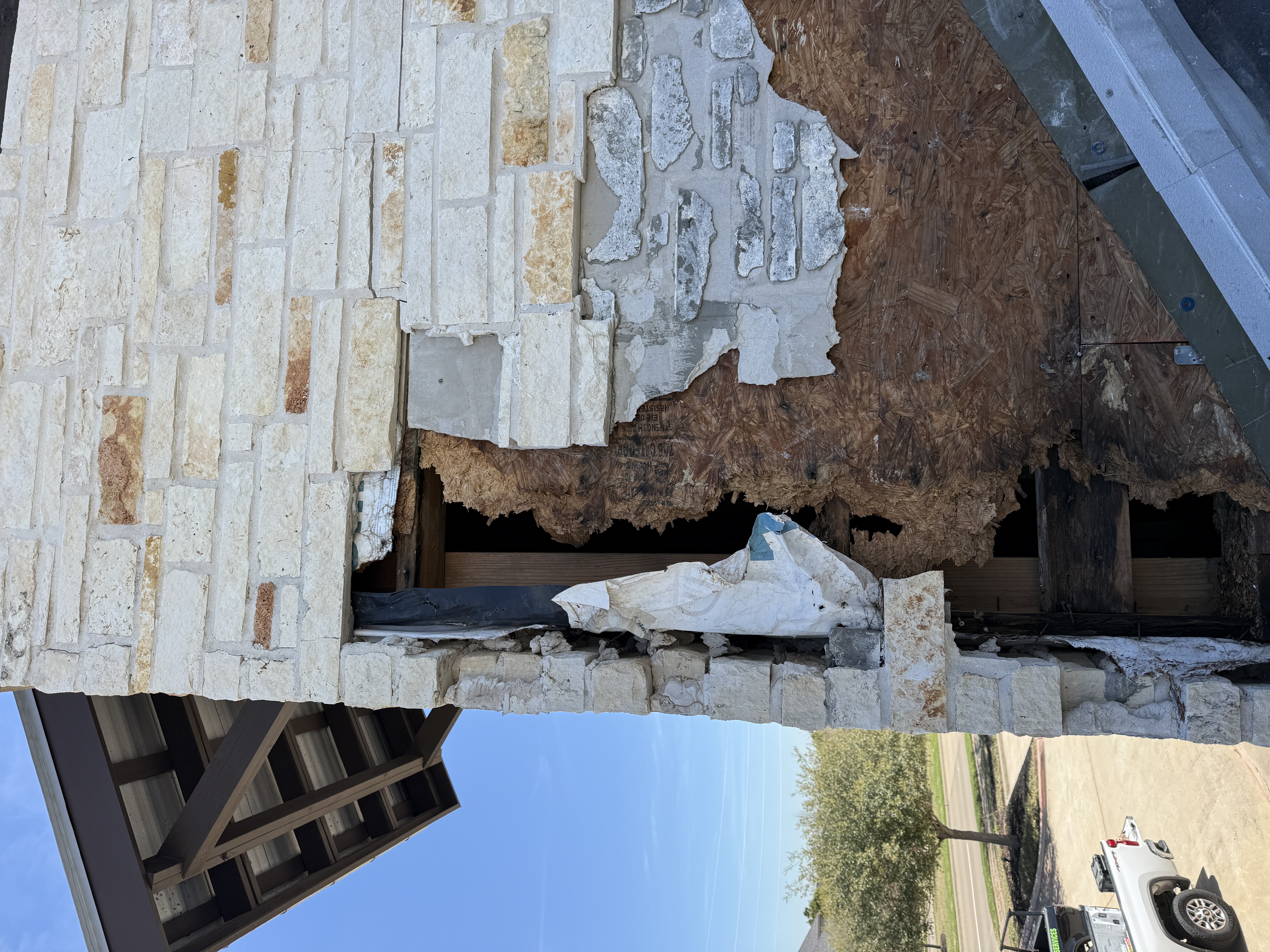
In a community-wide notice, homeowners were told that the Board had approved an emergency exterior repair to the clubhouse tower wall and adjacent fitness center area after significant water intrusion was found behind the masonry and flashing.

"Improper or missing flashing and Tyvek house wrap," "broken masonry allowing direct water penetration," "rotted sheathing and framing components behind the wall," and "active moisture intrusion that will worsen with upcoming rain."

Those are not cosmetic conditions. The Board's own notice describes hidden decay in framing members at an amenity building that has already suffered repeated leak and mold problems. Once rotted sheathing and framing are known, the responsible course is to document the condition thoroughly and obtain a qualified structural evaluation before simply closing the wall back up.

Ashley warned that the community should not gamble on another contractor-driven patch without first getting a structural engineer to determine whether the wall assembly and adjacent framing remain sound, what material must be replaced, and whether additional stabilization is necessary before repairs proceed.

Visible decay and damage at the Young Ranch clubhouse tower wall area

Why this matters: if leadership rushes to cover deteriorated framing without independent engineering review, the HOA risks paying for another incomplete repair while leaving unresolved safety issues inside the wall assembly.

  • Safety risk: hidden structural decay can continue to worsen if unstable materials are not fully evaluated and replaced.
  • Financial risk: surface repairs made before the full condition is understood often lead to repeat failures, added demolition, and higher costs.
  • Insurance and code risk: incomplete corrective work can create disputes over coverage, compliance, and responsibility if the problem returns.
  • Liability risk: if known deterioration later causes injury or major property damage, homeowners may ask why a proper structural review was not obtained when the warning signs were already documented.

The same notice also stated that Sixth Man Construction was selected based on "majority Board approval." That wording matters. Under Section 6.4 of the Young Ranch Bylaws, actions taken outside a noticed board meeting require unanimous written consent of all directors.

"The Board approved Sixth Man Construction to complete the emergency repair. Their proposal was selected based on majority Board approval..."

If this repair was authorized outside a meeting based only on a majority email vote, the approval method appears inconsistent with Section 6.4. Homeowners should demand the written record showing whether unanimous written consent existed, whether dissenting directors objected, and why an independent structural engineer was not engaged before moving forward.

At minimum, this sequence raises serious gross-negligence and fiduciary-duty concerns: Ashley warned that visible decay and repeated water intrusion required deeper evaluation, yet leadership still moved to spend HOA funds on a contractor-selected repair path without first obtaining an independent structural-integrity assessment. That is not a minor paperwork problem. It puts HOA property, HOA money, and potentially member safety at risk.

Evidence: Signing Unauthorized Contracts & Bypassing the Board

A Homeowners Association Board is a democratic panel of five equal directors. It is not a dictatorship. To protect your assessment dollars from fraud, favoritism, and waste, our governing documents dictate exactly how money can be spent.

Stephanie Simper routinely ignores these rules.

Under Section 6.4 of the Young Ranch Bylaws, any action taken by the Board outside of a formally noticed, open meeting requires the unanimous written consent of all directors.

Stephanie consistently violates this mandate. She treats the HOA like a personal fiefdom, operating the multi-million-dollar community via text messages with vendors from her personal cell phone and rapid-fire email chains. If she gets one or two of her compliant board members to say "Approved" in an email, she immediately authorizes the vendor to begin work, frequently overriding or entirely ignoring dissenting votes and questions before unanimous consent is reached.

The Evidence:

  • Change Orders on the Fly: When thousands of dollars in new masonry and roof repairs were needed in March 2026, Stephanie bypassed formal board meetings and competitive bidding, threatening to push the costs through as a "Purchase Order" via email without unanimous consent.
  • Emergency Repair by "Majority Approval": After homeowners were told the clubhouse tower wall and fitness center had rotted sheathing and framing behind the masonry, the official notice stated that Sixth Man Construction was approved based on "majority Board approval." If that decision was made outside a meeting, Section 6.4 required unanimous written consent, not a simple majority.
  • The MUD Agreement Surrender: Stephanie signed a Special Warranty Deed giving away community land to the MUD without simultaneously securing a revised Maintenance Agreement. The result was that Young Ranch was left footing the bill for landscaping and irrigation on property the HOA no longer owned. When Ashley drafted a revised contract to shift 100% of those irrigation costs back to the MUD, Stephanie blocked it and refused to let the HOA's attorney even review the cost-saving measure.
  • Circumventing Procurement: Stephanie controls a prepaid community debit card and uses it to purchase HOA supplies through her personal and workplace accounts, including Uline, Home Depot, and Nellis Auctions. While framed as "finding deals," buying community assets through personal accounts bypasses property management oversight, corrupts the audit trail, and violates basic non-profit accounting standards.

When a President routinely bypasses the bylaws to sign contracts without unanimous consent or an open meeting, they are not cutting red tape, they are operating rogue. It exposes the Association to immense legal liability and ensures that your money is spent in the shadows.

Email Evidence

Gross Negligence and Fiduciary Breach: Contractual Risk

Stephanie Simper demonstrated a reckless disregard for the legal and financial safety of the Board and the Association by aggressively defending a contract containing dangerous personal-guarantee clauses.

Failure to Protect Directors from Personal Liability: In January 2026, a $15,741.06 contract with AdvantaClean included a clause making Board members jointly and severally personally liable for the debt. When this was flagged, Stephanie refused a legal review and responded with hostility.

"And FYI I’m not paying out of my personal bank account but the community debit card from the community funds! Just stop! Stop typing, stop talking. Period."
January 13, 2026 at 3:45 AM CST


Violations of Association Bylaws and Procedural Requirements

Stephanie habitually bypassed the legal requirement for unanimous written consent for actions taken outside of formal meetings under Bylaw Section 6.4, effectively running the Board as a unilateral authority.

Bypassing the Board Vote: She repeatedly declared major expenditures approved without full consensus or formal meetings.

"It’s approved. Period. We are moving forward to get this gym/clubhouse repaired and opened for the community."
January 12, 2026 at 11:34 PM CST

Emergency Work Framed as a Majority Vote: In the later community notice about the clubhouse tower and fitness-center repair, homeowners were told the contractor was selected based on "majority Board approval" even though Section 6.4 requires unanimous written consent for action taken outside a meeting.

"The Board approved Sixth Man Construction to complete the emergency repair. Their proposal was selected based on majority Board approval..."

Shadow Governance: After Ashley left the Microsoft Teams channel because of Stephanie's verbal abuse, Stephanie pushed official business into Microsoft Teams to continue conversations she believed Ashley would not see.

"Board- lets discuss offline via teams so avoid numerous emails and one of us can reply in a separate email..."
February 4, 2026 at 5:19 PM CST


Financial Mismanagement and Vendor Bias

Under Stephanie’s presidency, the Association repeatedly returned to the same preferred vendor even as the underlying problems continued, resulting in more spending without a durable solution.

Blocking Competitive Bidding: Ashley requested second opinions so the Board could evaluate the best course of action before committing more HOA funds, especially because the same contractor had already been awarded repeated work and the leaks and related failures still persisted. Stephanie instead pushed to keep awarding additional thousands of dollars in discovered repairs to her preferred contractor, Sixth Man Construction, while dismissing calls for second opinions or bids to address underlying issues.

"I trust Brandon's work... a second bid... is not required... You should yield to trying to be right about everything when factually you haven;t been most times."
March 13, 2026 at 12:52 PM CDT


Professional Misconduct and Toxic Behavior

Stephanie Simper used psychological intimidation and personal verbal attacks to suppress the oversight duties of other directors.

Harassment and Infantilization: She used an unprofessional and abusive tone when questioned on technical errors.

"I’m fresh out of hand puppets and crayons but hopefully this photo... will suffice."
January 13, 2026 at 3:45 AM CST

Weaponizing Personal Status: She used another director's parental responsibilities to suggest they were unfit for office.

"Don’t you have young children that need your attention and should be getting some rest to tend to them during the day?"
January 13, 2026 at 3:45 AM CST

Gatekeeping Information: She admitted to hiding official HOA history in her personal accounts. Hiding correspondence on personal accounts means it would not be reported to homeowners making records requests and is also not available to other board members trying to keep good records.

"I’m sending this from my personal email because that is where Robin from KRJ would send emails all the time... probably why your team might be having problems finding information."
February 10, 2026 at 12:11 PM CST

Table of Contents

Know Your Rights: Transparency in the Young Ranch HOA

As a homeowner in Texas, you pay assessments to fund our community. In return, you possess absolute, legally protected rights to know exactly how your money is spent, how contracts are awarded, and how decisions are made behind closed doors.

There is a dangerous misconception currently being pushed by HOA leadership that Board business, vendor negotiations, and Director emails are "confidential board secrets."

This is legally false.

Under Texas Property Code Chapter 209, the business of the HOA is your business. The Association is legally required to keep its books and records open to and reasonably available for examination by any owner. Transparency is not a courtesy; it is the law.

Here is exactly what you are entitled to see and how to get it.

What You Have the Right to See

Texas law defines "books and records" broadly. Because the HOA manages your funds, you have the right to inspect:

  • Board Emails: Emails sent or received by Directors, officers, or the management company that discuss HOA business, including budgets, rule enforcement, vendor communications, and meeting scheduling, are requestable association records. Electronic formats do not make HOA business immune to oversight.
  • Contracts and Bids: You have the right to see every contract signed by the HOA, as well as the competitive bids, or lack thereof, leading up to those contracts.
  • Financial Records: Bank statements, general ledgers, invoices, and expense reports.
  • Meeting Minutes: Official records of all open and executive session decisions.

Note: The law does protect genuine privacy. The HOA is not required to release attorney-client privileged communications, nor will it release the personal financial data, contact information, or violation history of your individual neighbors.

The "Confidentiality" Myth

If an HOA President or Director claims that discussing a vendor contract, a landscaping bid, or a structural repair with the community is a "breach of confidentiality," they are misleading you.

When Directors conduct the business of the Association, they are acting as fiduciaries for the homeowners. Unless they are actively consulting with the Association's attorney regarding active litigation, or discussing a specific homeowner's private account, their HOA-related communications are public records for the membership.

You do not have to accept "just trust us" as an answer. You have the right to verify.

How to Request HOA Records in Texas

If you want to see the contracts being signed, the invoices being paid, or the emails justifying delayed projects, you simply have to ask.

Under Texas Property Code § 209.005, the process is simple:

  1. Draft a Written Request: Write a letter identifying the specific records you want to inspect or copy. Be precise. For example: "I am requesting all emails between Board members and Sixth Man Construction from January 1, 2026, to present," or "I am requesting all un-redacted vendor invoices paid in February 2026."
  2. Send it by Certified Mail: By law, you must submit your request by certified mail, with a return receipt requested, to the HOA's mailing address or its designated management company. For Young Ranch, this should be mailed to our current management company, Inframark.
  3. Choose Your Format: In your letter, state whether you want to inspect the records in person, or if you want copies forwarded to you electronically or by mail.
  4. The 10-Day Clock: Once the HOA receives your certified letter, they have 10 business days to either provide the records or send you a written notice stating that they need more time, which cannot exceed an additional 15 business days.

Demand Accountability

A healthy HOA operates in the light. When leaders attempt to hide their communications, bypass unanimous board consent, and shield vendor contracts from community scrutiny, it is the homeowners who ultimately pay the price.

Don't let anyone tell you that HOA business is none of your business. Exercise your rights. Demand the records. Demand transparency.

Lawsuit Update (April 9th)

Date: April 9, 2026

Case: Phillip McNallen and Ashley Malin v. Owners Association of Young Ranch, Inc. and Stephanie Simper, in her official capacity as President and Director

Cause No.: 26-DCV-342369

Important note: This bulletin is written for homeowners as a status update based on the filed court papers, the proposed bylaw amendment, the HOA email record, Teams notification emails, and the contract language discussed in those records. The case is still pending. No final judgment has been entered.

Brief summary

This lawsuit challenges how Young Ranch HOA business was handled during a dispute over vendor contracts, structural repairs, board communications, and a proposed bylaw amendment. The plaintiffs allege that major decisions were pushed through outside proper meeting procedures, records were scattered across personal and unofficial channels, objections to contracts and repair decisions were met with hostility, and a bylaw amendment was then advanced to loosen off-meeting action and make director removal easier.

The immediate court fight centers on two things: the proposed First Amendment to the Bylaws and the effort to remove Ashley Malin from the board. On April 2, 2026, the court signed an ex parte Temporary Restraining Order blocking further action on that amendment and any removal effort under it, while also ordering preservation of records across email, texts, Teams, personal devices, and vendor portals until the injunction hearing.

The broader factual record described in this bulletin concerns:

  • aggressive off-meeting decision-making,
  • defective or one-sided contract handling,
  • repeated reliance on informal approvals,
  • scattered recordkeeping across personal and unofficial channels,
  • hostility toward oversight,
  • and a documented push to change the bylaws in the middle of the conflict and remove the one director who kept objecting.

The sections that follow walk through the court posture, the amendment, the AdvantaClean contract, the repair dispute, and the quoted communications that are cited as evidence of retaliation and misconduct.

Where the case stands right now

According to the court papers currently on file:

  • On April 1, 2026, Phillip McNallen and Ashley Malin filed a verified petition seeking declaratory relief, a temporary restraining order, a temporary injunction, and a permanent injunction.
  • On April 2, 2026, the court signed an ex parte Temporary Restraining Order to preserve the status quo pending a hearing.
  • The court set the temporary injunction hearing for April 15, 2026 at 1:00 p.m. by Webex.
  • The citation, TRO service paperwork, and precept relating to the hearing were issued on April 7, 2026.

The TRO restrains the defendants from:

  1. voting on, adopting, signing, certifying, or filing the document styled "First Amendment to the Bylaws" before further court action;
  2. taking action to remove Ashley Malin, or any other elected director, under that purported amendment;
  3. treating the purported amendment as valid or enforceable before further order; and
  4. destroying, deleting, altering, concealing, or failing to preserve records relating to the association business implicated by the suit, including records in personal email accounts, text messages, Microsoft Teams, personal devices, and third-party vendor portals or accounts.

That does not mean the case is over. It does mean a district court concluded there was enough in the written record to step in immediately and stop the challenged conduct until a hearing could be held.

Order on TRO

The filed Temporary Restraining Order is embedded below for direct review on this page.

What the lawsuit says this fight is really about

The lawsuit does not frame this as a mere clash of personalities. It frames the dispute as a governance fight over whether the HOA will be run by its governing documents or by ad hoc email majorities, personal channels, and retaliation against dissent.

The petition states that Ashley Malin was the one director consistently:

  • raising structural and contractual issues,
  • demanding competitive bidding,
  • asking to review signed agreements,
  • objecting to off-meeting approvals,
  • and pressing for qualified professional evaluation of deteriorating structural components before more HOA money was spent.

The petition further alleges that, in response, Stephanie Simper engaged in a documented pattern of:

  • illegal off-meeting approvals,
  • poor contract controls,
  • shadow governance,
  • and hostile retaliation.

That matters because the proposed amendment and the removal effort did not arise in a vacuum. They arose after written objections to contracts, structural repair decisions, and records practices had already been made.

What the proposed "First Amendment to the Bylaws" actually would do

The proposed amendment is significant because it would directly shift power inside the HOA.

On its face, the document states that it was approved by a majority vote of the Board. It then does two major things:

1. It expands the Board's power to remove a director

The proposed amendment rewrites Section 5.3 so that, after declarant control, a director may be removed not only by a majority vote of the membership, but also by a 2/3rds vote of the Board of Directors.

That is not a clerical tweak. That is a direct power shift away from the homeowners and toward the sitting board.

2. It loosens off-meeting board action

The proposed amendment rewrites Section 6.4 to allow off-meeting action by electronic or telephonic means within a 24-to-72-hour window. It specifically gives the President the power to determine that time period unless unwilling or unable to do so.

The document also says that if any provision of the amendment conflicts with the bylaws, the amendment shall control.

That is why this document became the center of the litigation. It was not just about wording. It was about who controls removal power and how easily board action can be pushed through outside a formal meeting.

The AdvantaClean contract: what the actual contract language said

One of the clearest reasons this dispute escalated is that the actual AdvantaClean contract language was not merely imperfect. It was loaded with provisions any careful board should have stopped and reviewed.

Below are direct excerpts from the contract language provided for this update.

Personal guarantee language

"As the Owner or Authorized Representative, I/We/Us jointly and severally personally guarantee payment under this agreement."

That is not normal nonprofit-association protection language. It is the opposite.

No liability for mold-related failure

"AdvantaClean expressly declines any liability for mold, fungus, or microbial proliferation pursuant to, or resulting from our work."

The HOA was allegedly hiring the company for mold remediation. This clause said the company declined mold-related liability arising from the work.

No warranty

"Unless provided under separate cover, no warranty, either expressed or implied, exists in connection with AdvantaClean's services."

In plain English, that means: pay the invoice, accept the risk, and do not expect a warranty unless there is some separate document.

Crawlspace / dirt-floor language

"Remove large debris from crawlspace floor. All dirt to be raked clean for debris. Install a complete coverage 6-Mil Poly Plastic Vapor Barrier across the ground."

That language became a major flashpoint because the facility at issue is not a pier-and-beam house with exposed soil under a crawlspace. It is a community amenity building described in the record as sitting on a concrete slab.

New York guidelines in a Texas HOA job

"AdvantaClean provides mold remediation in accordance with the standards set forth by the IICRC ... the EPA ... and the New York City Department of Health and Mental Hygiene 'Guidelines on Assessment and Remediation of Fungi in Indoor Environments'."

That language reads more like generic template wording than a site-specific, Texas-focused remediation contract.

No guaranteed completion time

"AdvantaClean does not agree to guarantee that the work will be completed by or within any particular time."

Credit, collections, and lien language

The contract also contained unusually aggressive collections language, including:

"Owner authorizes AdvantaClean to perform routine credit history investigation at any time prior to or during this project."

"In the event of non-payment within terms, AdvantaClean reserves the right to file a Mechanics Claim of Lien for the full amount of work."

"Delinquent accounts may be turned over to the three major credit reporting agencies..."

Taken together, this was not a narrow, carefully tailored HOA contract. It was a heavily one-sided service agreement with personal-guarantee language, no warranty, no mold liability, aggressive collection terms, and site language that residents immediately questioned.

Why Ashley objected to the AdvantaClean contract

The objection was not that mold should be ignored. The objection was that the HOA should not sign a flawed contract just to move fast.

The written record contains clear objections. In the email record, Ashley wrote:

Ashley McNallen, in the AdvantaClean email thread:

"I am not in support of signing a contract that includes a personal guarantee for Board members, scopes of work for dirt floors that don't exist, and zero warranty on the results."

Ashley McNallen, asking management for legal review:

"Tanisha, can we have legal review the terms of this contract, it looks really bad for us."

Ashley McNallen, in the same objection thread:

"This invoice is nonsensical."

"They have a section about cleaning out the crawl space. We have a concrete foundation right, what crawl space are they cleaning?"

"This is the lowest effort contract I've ever seen and much of it does not make sense."

That is not sabotage. That is basic diligence from a director reviewing a five-figure remediation contract.

What happened next makes the contract fight even worse

The court filing states that after the contract was pushed through, the mold returned by March 2026, including on HVAC ductwork, and the HOA allegedly faced another $6,500.00 proposal to remove and replace contaminated duct components.

That matters for an obvious reason: if the vendor contract disclaimed mold liability and offered no warranty, then the HOA was left holding the bag when the problem came back.

This is exactly why contract review matters. A bad clause is not academic when the work fails.

The structural repair problem was not limited to mold

The petition and the evidence summary also describe a second major problem: repeated water intrusion and hidden deterioration in the clubhouse tower wall and adjacent fitness-center area.

According to the records described on this site, homeowners were informed that there was:

  • improper or missing flashing,
  • broken masonry allowing water penetration,
  • rotted sheathing and framing,
  • and active moisture intrusion.

Those are not cosmetic defects. Those are warning signs of concealed structural damage in a building that had already experienced repeated leak and mold issues.

The lawsuit says Ashley Malin asked for an independent structural engineer to determine the extent of the damage and the proper scope of repair. Instead, the petition alleges the work was pushed toward a preferred contractor through email rather than through fully vetted, professionally analyzed, open-meeting decision-making.

That is one of the lawsuit's core points: the problem was not just one contract. It was a broader pattern of informal approvals, weak review, and resistance to independent scrutiny.

The written tone in the record matters

Bland descriptions like "communications broke down" do not capture what appears in the written record. The tone shown in the record is part of the story because it helps explain why the dispute escalated, why oversight became difficult, and why the bylaws suddenly became a target.

What follows are direct excerpts from the email record and Teams notification emails. Some are short. Some are ugly. All are important because they show the pattern over time.

Direct excerpts showing the pattern of hostility, intimidation, and retaliation

Stephanie Simper, January 12, 2026 - AdvantaClean thread

"your email is completely unprofessional as you sound absolutely clueless on what this is all about."

"Please stop wasting our time..."

"It's approved. Period. We are moving forward to get this gym/clubhouse repaired and opened for the community."

That is the tone used after objections were raised about personal guarantees, site-mismatch scope language, and lack of warranty.

Stephanie Simper, January 13, 2026 at 3:45 a.m. - AdvantaClean thread

"Just stop. Right now."

"I'm appalled and outraged I'm having to school you in this at 3AM."

"I'm fresh out of hand puppets and crayons..."

"Just stop! Stop typing, stop talking. Period."

"You clearly don't know the law and how HOA's work..."

"It's making you sound inadequate."

"Don't you have young children that need your attention and should be getting some rest to tend to them during the day?"

"I will be speaking with Tanisha AND the Board tomorrow regarding your position going forward."

Stephanie Simper, January 13, 2026 - later in the same AdvantaClean thread

"I will be speaking with management and legal counsel on our options regarding these unneeded stresses..."

This is where the contract fight stops looking like a normal disagreement and starts looking like a retaliatory pressure campaign.

Stephanie Simper, February 17, 2026 - pool operations thread

"only Randy, Darrell, and I know how this works..."

"I refuse to allow my summer to be spent picking up after people..."

"those that want a pool with longer hours... should just get a pool of their own in my opinion."

Stephanie Simper, March 5, 2026 - MUD / landscaping credit thread

"I do understand that you are new to the community and so those of us seasoned residents are well aware..."

That phrase shows up more than once in this record: questions are not answered on the merits; they are waved away by stressing who is new and who is supposedly entitled to speak with authority.

Stephanie Simper, March 8, 2026 - proposed MUD agreement thread

"The fact you are changing legal paperwork seems to be out of your scope of duties."

"If this is something that was generated by your newly purchased AI program... I highly suggest you stop immediately."

"You do not know your place on this panel..."

"You are not in charge here..."

"you have presented yourself as a rogue board member."

"there is going to be a decision and a vote regarding your position on the board..."

"We will be speaking with legal counsel on moving forward with the formal process on your removal from the board."

At that point, the retaliation theory is not abstract anymore. It is written down.

Randy Bienek, March 9, 2026 - removal thread

"I move we schedule a special meeting to vote on the removal of Ashley McNallen."

Tiyonda Omoni, Inframark Community Manager, March 9, 2026 - written correction

"After reviewing the Owner's Association of Young Ranch Bylaws, I must clarify that the Board of Directors does not have the authority to remove a sitting director."

That management correction is one of the most important lines in the entire record. The removal push advanced far enough that management had to step in and say, in writing, that the Board lacked the power it was trying to exercise.

Comparison of the objections and the responses

Another reason the record matters is that the underlying objections were often calm, specific, and tied to actual contract language.

For example, Ashley's written objections included:

Ashley McNallen, in the AdvantaClean objection emails:

"I am not in support of signing a contract that includes a personal guarantee for Board members, scopes of work for dirt floors that don't exist, and zero warranty on the results."

"This proposal needs to be sent back... to remove the personal guarantee, correct the scope of work to match our building, and reference Texas statutes."

"Tanisha, can we have legal review the terms of this contract, it looks really bad for us."

That is what makes the response record so damning. The record does not show careful rebuttal followed by open deliberation. It shows ridicule, shutdown language, personal attacks, and threats about board position.

Why the records issue is bigger than one argument

The court papers do not just talk about one ugly email chain. They talk about fragmented records and informal governance.

The petition alleges a pattern in which HOA records were spread across:

  • personal email accounts,
  • text messages,
  • Microsoft Teams,
  • vendor portals,
  • and personal devices.

That is a governance problem all by itself.

When association business is conducted through personal and scattered channels, several things happen at once:

  • the Board loses a reliable central record,
  • homeowners lose meaningful transparency,
  • signed agreements and approvals become harder to verify,
  • and the association becomes vulnerable to selective disclosure, missing context, and finger-pointing.

That is why the TRO's preservation language is so broad. The court did not limit preservation to official HOA inboxes. It specifically reached into the personal and third-party systems where the record was alleged to exist.

Sequence of events surrounding the proposed amendment and removal effort

Read the sequence in order:

  1. A director objects to contract terms, off-meeting approvals, and lack of structural review.
  2. That director is mocked, belittled, and told to stop talking.
  3. Official business is steered into side channels and offline coordination.
  4. Communications escalate into direct statements about board position and removal.
  5. A proposed bylaw amendment appears that would make board-member removal easier and off-meeting action looser.
  6. A removal push follows.
  7. Management has to clarify that the Board lacks authority to remove a sitting director under the existing bylaws.
  8. The court intervenes before the challenged amendment and removal effort can move forward.

That sequence helps explain why the retaliation claim became central to the case. Even before any final ruling, the pattern in the record helps explain why the matter wound up in court.

Questions raised by the record

At a minimum, the record raises the following questions:

  1. Where are all signed contracts, approvals, invoices, and supporting communications?
  2. Were major expenditures and repair decisions approved in properly noticed meetings, or outside meetings without unanimous written consent?
  3. Why was a contract with personal-guarantee language, no warranty, no mold liability, and crawlspace dirt-floor language ever allowed to move forward?
  4. Why was independent engineering review resisted when rotted framing and concealed deterioration were documented?
  5. Why were personal channels, Teams side discussions, and unofficial communications being used for HOA business?
  6. Who drafted the proposed bylaw amendment, who approved it, and why was it advanced when a removal campaign was already underway?
  7. Have all HOA-related records on personal email accounts, phones, Teams, and vendor portals now been preserved?

Closing

This dispute should not be reduced to a personality conflict.

The contract language was real. The quotes were real. The removal push was real. The management correction was real. The proposed amendment was real. The court intervention was real.

The record shows why these events and decisions have drawn serious scrutiny. It also shows why transparency matters now more than ever.

The issues described here concern whether HOA governance is open, professional, documentable, and legally grounded, or instead driven by rushed approvals, hidden channels, bad contracts, retaliatory maneuvering, and contempt for basic oversight.

Read the documents. Read the quotes. Compare the contract language to the responses it triggered. Then ask yourself whether this is how a well-run HOA is supposed to operate.
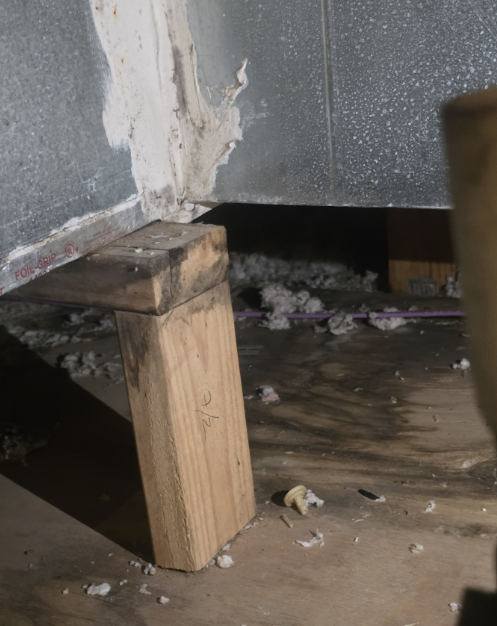
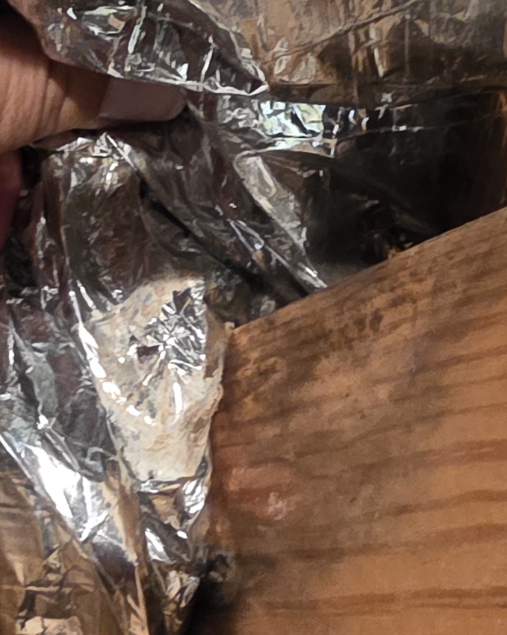
Annotated Exhibit

AdvantaClean Contract

This is explanatory commentary for homeowners, not legal advice. Any HOA contract with these terms should be reviewed by qualified counsel before signature.

All sections with notes are issues Ashley brought before the board: Stephanie, Brooke, Randy, and Darrel. Even after those issues were highlighted line by line, no other board member objected to signing this agreement. An agreement that allows for the vendor to effectively bill any amount, deliver nothing, take as long as they want, offer no warranty, and charge the members of the board personally to pay for any debts.

Scope of Work

Remediation with Protocol

The Scope of Work includes the following, and is written to conform to the standards and requirements set forth in the site-specific remediation protocol developed by HAVOC CONSULTING SERVICES, dated 03/13/25, provided to AdvantaClean by the Client.

Remediation Areas

  • Gym Area All Walls Removed - Wood Studs (Clean) - Removal should include drywall 2 feet past the last visible moisture and mold damage wall.
  • Clubhouse Sink Area Removed - Wood Studs (Clean) - Removal should include drywall 2 feet past the last visible moisture and mold damage wall.
  • HVAC System and Air Vents - Cleaned.

General Remediation Practices

AdvantaClean provides mold remediation in accordance with the standards set forth by the IICRC (Institute of Inspection, Cleaning and Restoration Certification) S-520, the EPA (Environmental Protection Agency), and the New York City Department of Health and Mental Hygiene "Guidelines on Assessment and Remediation of Fungi in Indoor Environments". In the absence of a third-party site-specific remediation protocol, the methodology used will depend on our professional opinion, the type of material(s) affected and your exact property conditions. Please note that certain techniques may or may not be necessary for your specific project.

IICRC Condition 1 and PRV

AdvantaClean will provide mold remediation for the area specified to Condition 1 as defined by the Institute of Inspection, Cleaning and Restoration Certification S-520 "Standard and Reference Guide for Professional Mold Remediation," Second Edition, published August 2015. This Standard defines Condition 1 as "an indoor environment that may have settled spores, fungal fragments or traces of actual growth whose identity, location and quantity is reflective of a normal fungal ecology for a similar indoor environment." Achievement of Condition 1 will be documented by a third party post remediation verification assessment. The third party assessment shall include bulk air samples, and accredited laboratory analysis. Any cost for the post remediation verification (PRV) shall be between the assessor and the customer.

Structural Drying

Install temporary dehumidification and/or air movers to dry the remaining structural components until wooden substrates are measured to match an established dry standard.

Single Room

Construct a localized containment system and establish negative pressure in the room. Any HVAC vents are to be closed and / or temporarily sealed as needed to obtain negative pressure within the containment system relative to the inhabited space and / or the outdoor environment. All exhaust lines are to be HEPA filtered. Remove any impacted building materials continuing 24" past any visible microbial growth or water damage. Remove any exposed porous substrates (insulation, etc.) Seal the demolition debris in 6-mil contaminated debris disposal bags and dispose of off-site. HEPA vacuum the exposed substrates and flat surfaces within the containment areas. Wire-brush areas of intense or elevated colonization while HEPA vacuuming. Thoroughly clean the exposed substrates and flat surfaces, including any exposed mechanical components and fixtures, on all exposed sides with an anti-microbial disinfectant solution.

6-Mil Vapor Barrier

Remove large debris from crawlspace floor. All dirt to be raked clean for debris. Install a complete coverage 6-Mil Poly Plastic Vapor Barrier across the ground. All seams shall be lapped 12" and staked down.

Air Scrubbing

Following all structural detailed cleaning, HEPA filtered air scrubbers shall remain in the work area, running under neutral pressure for 48 hours.

Stain Remover

Apply a microbial stain-lightener to the areas with residual staining from advanced microbial growth.

Soft Goods Handling

Linens, clothing, draperies, and other soft goods within the containment area will be bagged and transferred to the customer to be washed in hot water, dry cleaned, or discarded.

Interior Fogging

Fog the interior of the remediation work area with an approved anti-microbial solution.

Duct Cleaning with Anti-Microbial Treatment

Clean all interior components of the air conveyance system (i.e. sheet metal ducts, rigid fiberglass ductboard, and flex duct). Cleaning will properly remove lint, hair, fungi, dirt and other foreign materials and residues. All interior components of the air handler shall be cleaned in-place. All mechanical or machined components shall be maintained for corrosion by removing loose rust and scale. Following the completion of the mechanical cleaning process, a residual antimicrobial treatment shall be applied to the interior of the ductwork. Anti-microbial solutions will be applied per manufacturer's specifications.

Contents Cleaning

Furnishings, miscellaneous contents, and bric-a-brac items within the containment area will be covered with plastic during any demolition and /or removal of interior finishes. During the remediation, these items will be cleaned by HEPA vacuuming and damp wiping semi-porous and non-porous items with an anti-microbial solution.

HVAC System Off

The HVAC System servicing/running through the remediation work area may be shut off during the remediation in order to establish and maintain negative pressure within the containment. Depending on the location of the central HVAC system, this may leave portions of the structure without heat or air for the duration of the remediation process. Depending on the outside conditions at the time remediation is performed, auxiliary temporary climate control may be required during remediation. Costs associated with temporary climate control are not included in this estimate.

Containment Construction

Containment systems are constructed using 6-mil poly plastic, spring loaded poles and adhesives. In order for containment to properly serve its intended function of isolating work areas, in almost all cases, it must be sealed to portions of the interior of the building. AdvantaClean will make an effort to keep the adhesives (spray, tape, etc.) that may be used during the containment construction process from damaging as few surfaces as possible. However, unless specifically agreed upon in writing prior to beginning work, AdvantaClean cannot be responsible for damages to trim, paint, wallboard or flooring due to containment construction and adhesion, as proper containment is essential when performing microbial remediation.

Hidden Damage

This Scope of Work is based upon visual observations at the time of inspection. Occasionally, hidden or additional damage is discovered during the course of work that could expand the scope or result in additional charges. Should this occur during this project, the owner or owner's agent will be notified and a change order issued and accepted before commencing any additional work.

No Repairs Included

This Scope of Work and quote is for Investigative Demolition and Microbial Remediation ONLY. It does not include any replacement of the building materials removed during the remediation process, unless items are specifically outlined above.

Terms and Conditions

Abbreviations

For the purpose of this Contract "AdvantaClean" refers to the service provider whose address appears on the face of this Contract, and "Owner" refers to the Property Owner, or their Authorized Representative, of the subject property. All AdvantaClean Service Providers are Independently Owned and Operated.

Emergency and Loss Mitigation Services Labor Rate Ranges

At the sole discretion of AdvantaClean, in the event that unit pricing is not utilized and labor rates are not specified elsewhere in this proposal, Emergency and Loss Mitigation Services may be billed at the following default labor rate ranges, which may vary from location to location. Cleaning Technician: $29.75 - $42.50 per hour, Emergency Technician: $42.50 - $59.50 per hour, Skilled Labor: $48.50 - $67.50 per hour, Site Supervision: $79.50 - $92.50 per hour, Executive Supervisor: $118.00 - $139.00 per hour.

For Specialty Services (mold remediation/trauma clean-up/abrasive blasting, for example) special rates may apply. After-Hours Rates shall be the base rate times a multiple of 1.5. Materials and specialty trade Contractors shall be billed at cost plus twenty percent (20%). All rates are subject to change without notice.

Scope of Work

Emergency and Loss Mitigation Services may include, but are not limited to soft demolition, removal of wet building materials, structural drying, contents pack-out, moving, storage, contents cleaning and restoration, sealing of walls and ceilings, mold remediation, carpet/upholstery/air duct cleaning, roof tarp, temporary roof repair, board up, provision of temporary power, etc.

Equipment

Rental rates for typical equipment shall be established by Xactimate. Equipment rental is charged per 24-hour period, and any portion of a day shall be charged as a full day. Owner agrees to reimburse AdvantaClean for the full replacement cost of any equipment that is damaged and/or missing from the property at pick up. In the event that the occupant or others turn off equipment without direction from, or notification to, AdvantaClean, billing shall continue until pick up. All rates are subject to change without notice.

Contract

This document is a binding Contract between AdvantaClean and Owner. Upon execution of this Contract, AdvantaClean will incur both direct and indirect costs associated with this project. In the event of termination of Contract by Owner, AdvantaClean shall be paid immediately the greater of (a.) the prorated value of work completed on behalf of the project including any labor, materials, research, supervision, direct overhead, handling, taxes, pick-up, shipping, delivery and cost of capital; or (b.) liquidated damages not to exceed ten percent (10%) of the Contract amount.

While AdvantaClean is performing the work, Owner shall not enter into a Contract with any other service provider for any other work at the subject property that interferes with AdvantaClean's ability to perform the work. AdvantaClean reserves the right to refuse to perform all or part of the scope of work at its sole discretion.

Completion of Work

AdvantaClean will complete the work as soon as practically possible. However, unless otherwise specified, AdvantaClean does not agree to guarantee that the work will be completed by or within any particular time.

Schedule of Payments

The amount of deposits and schedule of payments may vary on a job-by-job basis. However, all jobs are due and payable in full upon completion. For any jobs with insurance proceeds, full payment is due and payable within three days of receipt by Owner from the Insurance Company. It is the responsibility of the Owner to make all insurance drafts liquid and available to remit, free and clear of all third party assignments, specifically the mortgage company, immediately upon receipt of said draft.

Credit and Collections

Owner authorizes AdvantaClean to perform routine credit history investigation at any time prior to or during this project. In the event of non-payment within terms, AdvantaClean reserves the right to file a Mechanics Claim of Lien for the full amount of work. Delinquent accounts may be turned over to the three major credit reporting agencies, which could have a negative impact on Owner's credit rating. All accounts over ten (10) days past due will be subject to a one and one-half percent (1.5%) service charge per month or up to the maximum permitted in the jurisdiction of the property. In the event of any legal actions, AdvantaClean shall be entitled to collect attorney's fees and all costs of collection. The sole and exclusive venue for any legal action arising from this Contract shall be in the county of the respective AdvantaClean office. As the Owner or Authorized Representative, I/We/Us jointly and severally personally guarantee payment under this agreement.

Access

Owner is obligated to provide reasonable access to the subject property for the purpose of performing the work without delay. Owner authorizes free use of all available utilities including electricity, water, gas, or oil for heating and sanitary facilities. In the event Owner has vacated the property during the course of the work, Owner agrees to arrange for AdvantaClean to escort Owner to inspect the property during the structural phase to ensure the safety of Owner. Owner agrees to pay additional charges incurred as a result of their failure to provide responsible or scheduled access.

Limits of Liability

Notwithstanding other specific arrangements, AdvantaClean limits its responsibility for any and all claims of missing or damaged personal property to an aggregate amount of $250.00 per Contract. It is the sole responsibility of Owner to inspect personal property for damage or to review any inventory list and document condition prior to and pursuant to handling. Owner agrees to report any claims of damages within 72 hours of handling. Any damage claims after 72 hours will not be considered. AdvantaClean is not responsible for the consequential damages to landscaping, driveways, and walkways, or for damages due to water infiltration or freezing during the course of the work. AdvantaClean expressly declines any liability for mold, fungus, or microbial proliferation pursuant to, or resulting from our work.

Supervision

AdvantaClean will provide adequate supervision of the work to ensure quality control, direction and safety. Owner is obligated to be available for on-site discussion during the course of the work, as some items in the scope of work require approval by Owner. In the event Owner is not available for such approval, Owner authorizes AdvantaClean to make the necessary decisions so as not to delay the project.

Pets

Owner is responsible to provide adequate means of pet control to ensure the safety of both the animal and AdvantaClean staff. Pet control includes, but is not limited to, containment of all animals, provision of power and protection of fish tanks and aquariums, and removal of animals from work areas. Owner agrees to notify AdvantaClean of any dangerous animals on or near the property. AdvantaClean assumes no liability for injury, death or loss of pets.

Working Hours

Normal working hours are Monday through Friday from 7:00 AM to 5:00 PM. Any work, meetings, discussions or consultation outside of these hours may represent additional charges to Owner and are due and payable upon demand.

Warranty

Unless provided under separate cover, no warranty, either expressed or implied, exists in connection with AdvantaClean's services. If AdvantaClean is directed and/or otherwise prevented from completing the work within the prevailing standard of care, AdvantaClean shall not be responsible for any subsequent defects that arise. Claims for defective workmanship must be forwarded immediately in writing to the respective AdvantaClean office for consideration. AdvantaClean reserves the exclusive right to cure any defects within 60 days of receipt of said notice. AdvantaClean must be provided reasonable and scheduled access to complete the work. No call back repairs will be considered on any account with an outstanding past due balance.

Submitted Signatures

Once a sufficient number of signatures has been obtained to support formal action, the unredacted signature list will be submitted to the court or other appropriate governing authority.

Name Address Email IP Address Submitted
No signatures have been recorded yet.